What Does the Underpinning Process Involve?
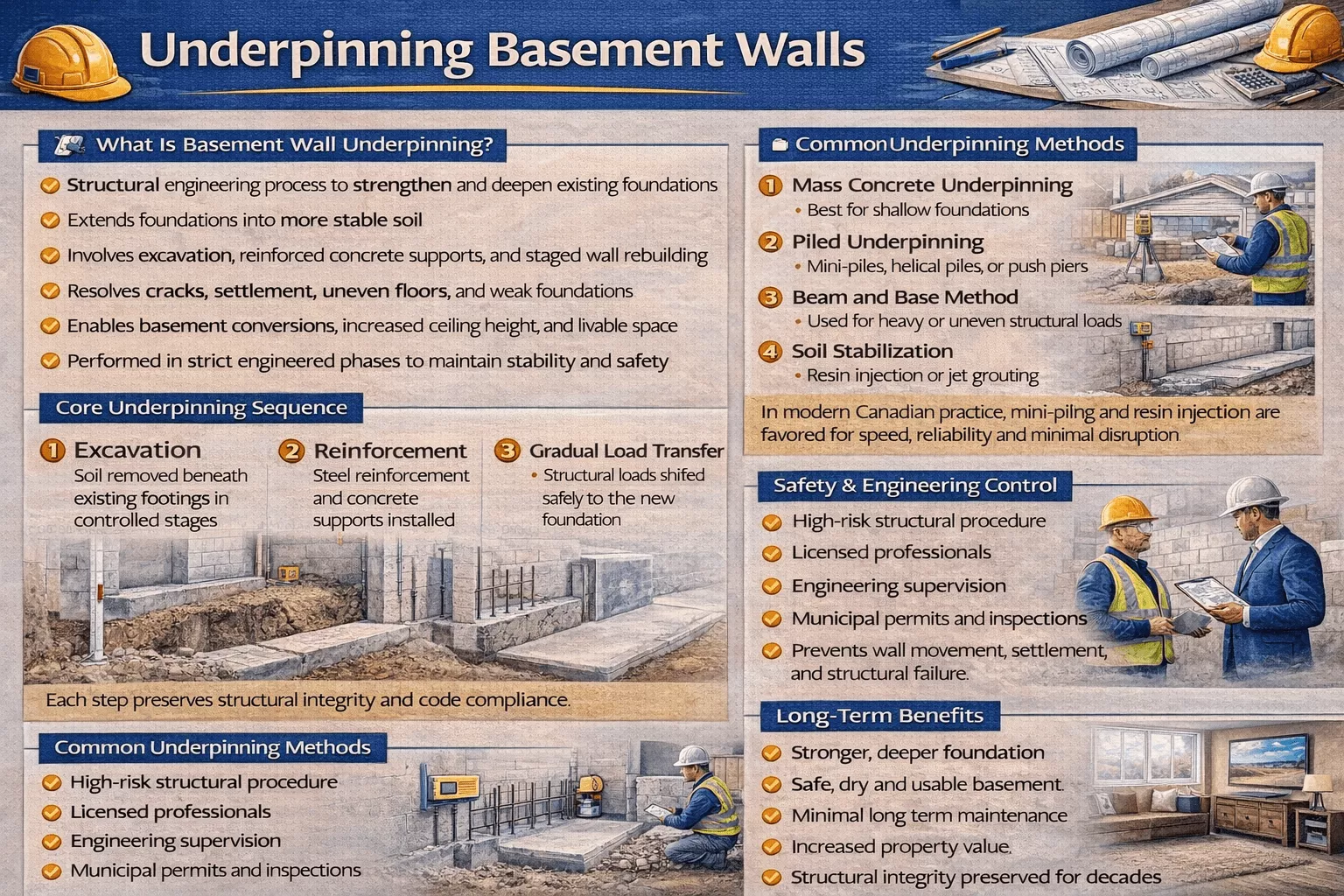
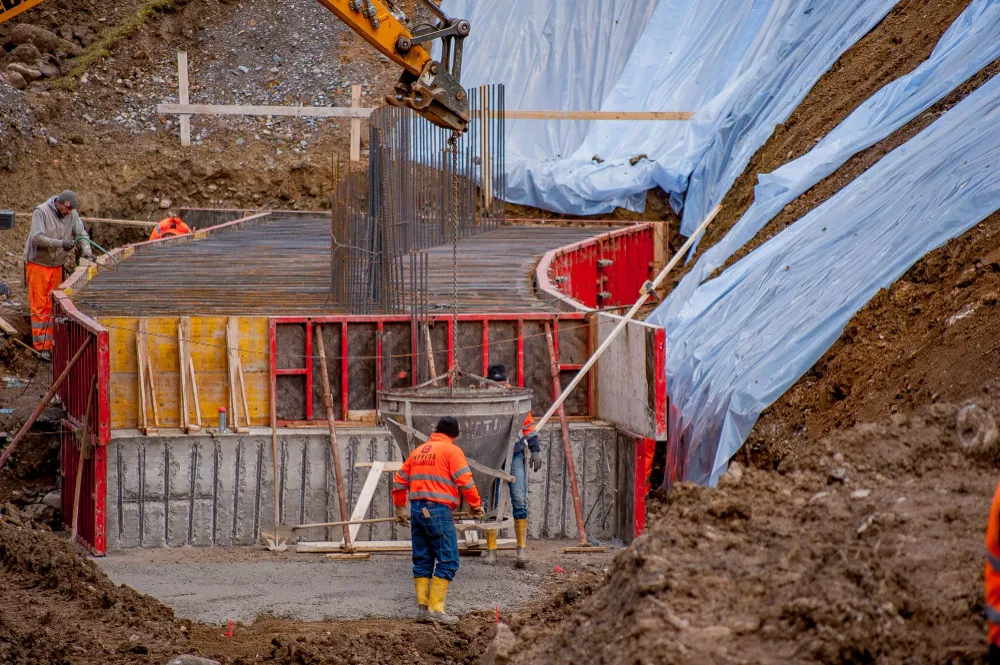
The underpinning process involves strengthening and deepening an existing foundation to restore or enhance structural stability. It’s used when the original foundation can no longer safely support the load due to soil movement, added weight from extensions, or deterioration over time. The process is completed in carefully engineered phases to prevent structural stress and ensure full safety throughout.
How Does Underpinning Strengthen and Stabilize Existing Foundations?
Underpinning reinforces the foundation by transferring the building’s weight onto a new, deeper, and stronger base. Engineers excavate sections beneath the existing footing, pour high-strength concrete, and allow it to cure before proceeding to the next stage. This creates a continuous, reinforced support that stabilizes the entire structure.
Here are the Underpinning Strengthen and Stabilize Existing Foundations Key outcomes:
- Restores foundation strength in unstable soil conditions
- Corrects uneven settlement or structural sagging
- Extends foundation depth for additional load-bearing capacity
- Provides long-term stability for property extensions or added floors
What Are the Core Stages in a Standard Underpinning Sequence?
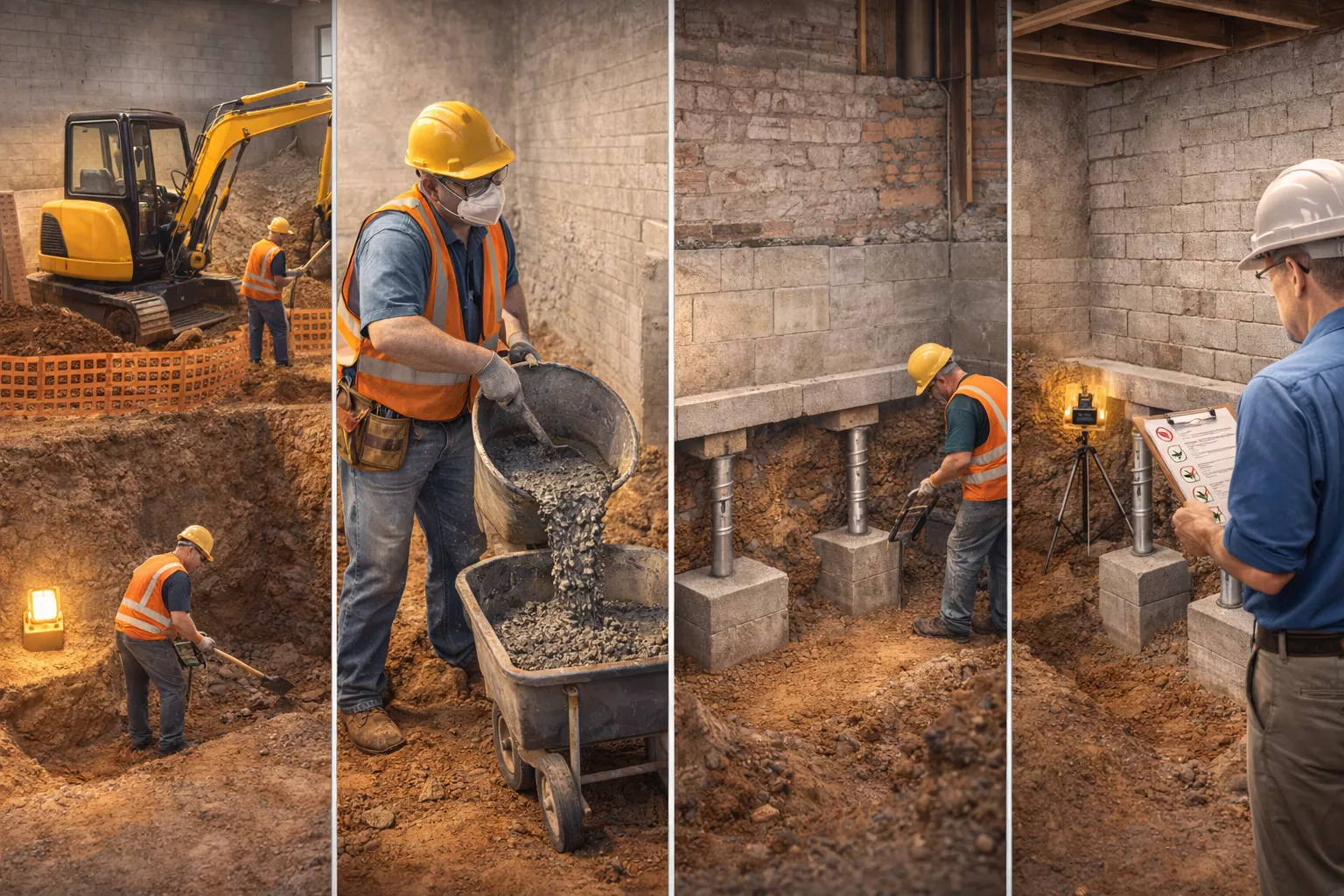
The underpinning process follows a structured, methodical sequence to ensure the building remains stable throughout every phase of work. Each stage is carefully planned and supervised by engineers to maintain safety, precision, and compliance with building codes. The process begins with a detailed inspection and design phase, followed by sectional excavation and concrete placement. Each section is completed and cured before the next begins, preventing uneven load transfer or settlement. Once the new footing is set, the structure is reloaded and the site is restored, leaving a stronger, deeper, and more reliable foundation.
Here’s an overview of the main stages involved in a standard underpinning sequence:
| Stage | Action | Objective |
|---|---|---|
| 1. Assessment | Engineers inspect the site, review soil conditions, and identify foundation weaknesses. | Determine the appropriate underpinning method and scope of work. |
| 2. Design & Permits | Structural drawings and calculations are prepared and submitted for approval. | Ensure safety standards and regulatory compliance. |
| 3. Sectional Excavation | Small sections beneath the existing foundation are excavated in sequence. | Maintain stability and control during soil removal. |
| 4. Concrete Placement | High-strength concrete is poured into each excavated pit and reinforced as required. | Form a new foundation that supports beneath the original footing. |
| 5. Curing & Load Transfer | Concrete is left to cure before transferring the structural load gradually. | Reinstate full support for the strengthened foundation. |
| 6. Finishing & Backfill | Excavated areas are filled, compacted, and levelled; the site is restored. | Complete stabilization and prepare the basement for flooring or finishing. |
This sequential approach ensures that each underpinning stage builds safely upon the last, maintaining structural integrity while delivering a deeper, more resilient foundation ready for long-term use.
Why Is Section-by-Section Excavation Critical for Foundation Safety?
Excavating the entire foundation at once can cause the structure to collapse or shift. The section-by-section method—also known as pin underpinning—ensures only a small part of the footing is exposed at any given time. This maintains continuous support, allowing the rest of the foundation to bear the load safely while work progresses.
What Materials Are Commonly Used in Modern Underpinning Methods?
Modern underpinning techniques use a variety of materials chosen for strength, durability, and compatibility with soil conditions.
Common materials include:
- Concrete: The most widely used material for mass pour or beam-and-base underpinning.
- Steel Piles: Used in screw pile or mini-pile systems for deeper or unstable soils.
- Grout or Resin Compounds: Injected into weak soils to fill voids and enhance load-bearing capacity.
- Reinforcement Bars (Rebar): Embedded in concrete to increase tensile strength.
The choice of material depends on factors such as soil type, building load, environmental conditions, and project budget.
The underpinning process is both structural and strategic, combining precision engineering with safety-led practices to strengthen the foundation and secure the building for decades to come.
How Is the Site Prepared Before Underpinning Begins?
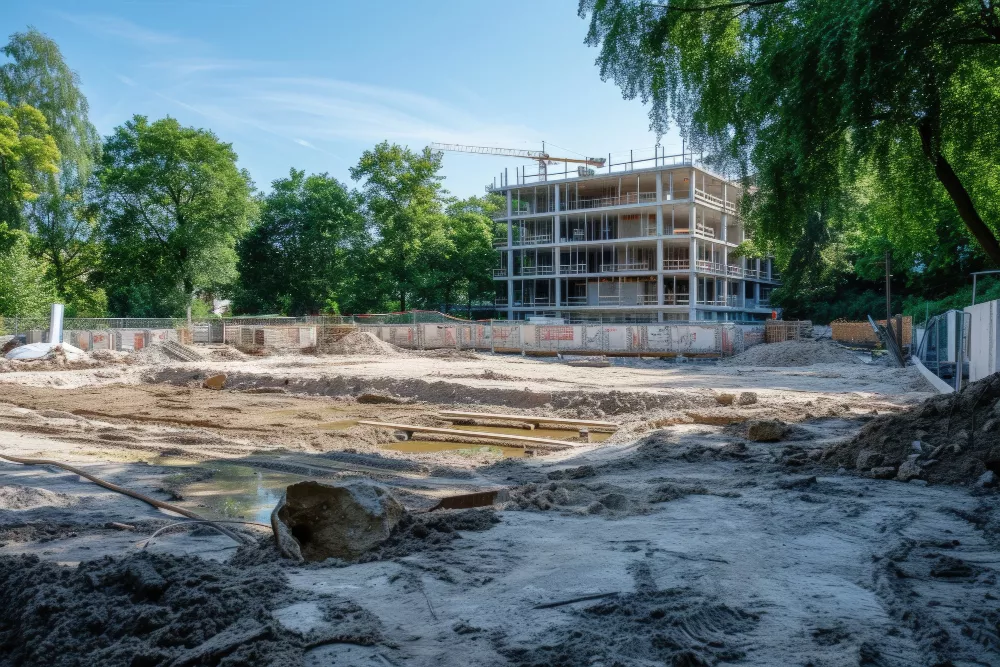
Site preparation is a crucial first phase in the underpinning process. Before any excavation or foundation work begins, engineers and contractors carry out detailed evaluations to ensure the site conditions are safe, stable, and compliant with construction standards. Preparation includes assessing structural risks, reviewing soil performance, identifying hidden utilities, and confirming that all safety measures are in place. Proper groundwork ensures that the underpinning can proceed without causing settlement, vibration damage, or service disruptions to the property or neighbouring structures.
What Pre-Construction Inspections Determine the Need for Underpinning?
Before underpinning is approved, engineers conduct a thorough inspection of both the structure and the surrounding environment. The purpose of these inspections is to establish whether the existing foundation can continue to safely support the building and to identify any early warning signs of instability.
Key inspection activities include:
- Visual assessment: Detects wall cracks, floor gaps, leaning chimneys, or sticking doors that indicate settlement.
- Structural survey: Measures foundation depth, material condition, and load paths through the structure.
- Soil movement history: Reviews site records and nearby construction activities for potential ground disturbance.
- Moisture and drainage review: Checks for water intrusion or hydrostatic pressure affecting foundation walls.
These inspections help determine whether full underpinning, partial reinforcement, or an alternative method like benching is the safest solution.
How Is the Load-Bearing Capacity of the Soil Assessed?
Soil strength directly determines the success of an underpinning project. Geotechnical engineers perform detailed soil investigations to understand how the ground will respond to additional weight and excavation.
Typical soil assessment methods:
- Borehole sampling: Extracts deep soil samples to examine layers, density, and water content.
- Standard penetration testing (SPT): Measures resistance of soil to penetration, indicating load-bearing strength.
- Laboratory analysis: Tests moisture content, clay reactivity, and compaction characteristics.
- Groundwater monitoring: Evaluates seasonal water fluctuations that may affect stability.
This data guides the underpinning design, ensuring the new foundation rests on stable strata with adequate load-bearing capacity.
Why Must Utilities and Drainage Be Identified Before Excavation?
Before excavation begins, contractors must locate all underground utilities such as gas lines, water mains, sewers, and electrical conduits. Hitting or damaging any of these systems can lead to severe safety hazards, property damage, or costly project delays.
Reasons for mapping utilities and drainage:
- Worker safety: Prevents accidents from ruptured gas or electrical lines.
- Structural protection: Avoids unintentional weakening of nearby service trenches or retaining walls.
- Drainage control: Ensures existing systems remain functional during and after underpinning.
- Planning efficiency: Helps integrate waterproofing and sump pump designs into the new layout.
Identifying utilities and drainage early allows engineers to coordinate excavation paths safely and protect essential infrastructure throughout the underpinning process.
Comprehensive site preparation—combining inspection, soil testing, and service mapping—forms the foundation of a safe, compliant, and well-engineered underpinning project.
What Are the Key Steps in the Underpinning Process?
The underpinning process unfolds through a series of carefully sequenced steps that ensure stability, safety, and precision at every stage. Each action builds on the previous one, allowing the structure to remain supported as the foundation is deepened and reinforced. This step-by-step approach is vital for maintaining balance, avoiding sudden shifts, and ensuring the new footing integrates seamlessly with the existing structure.
How Is the Foundation Excavation Performed in Stages?
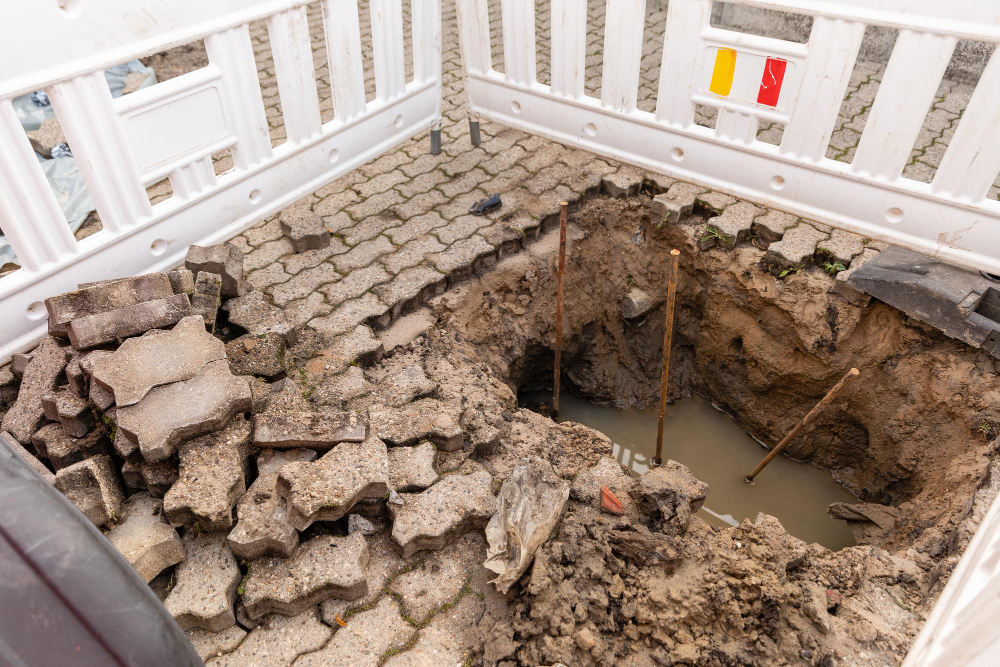
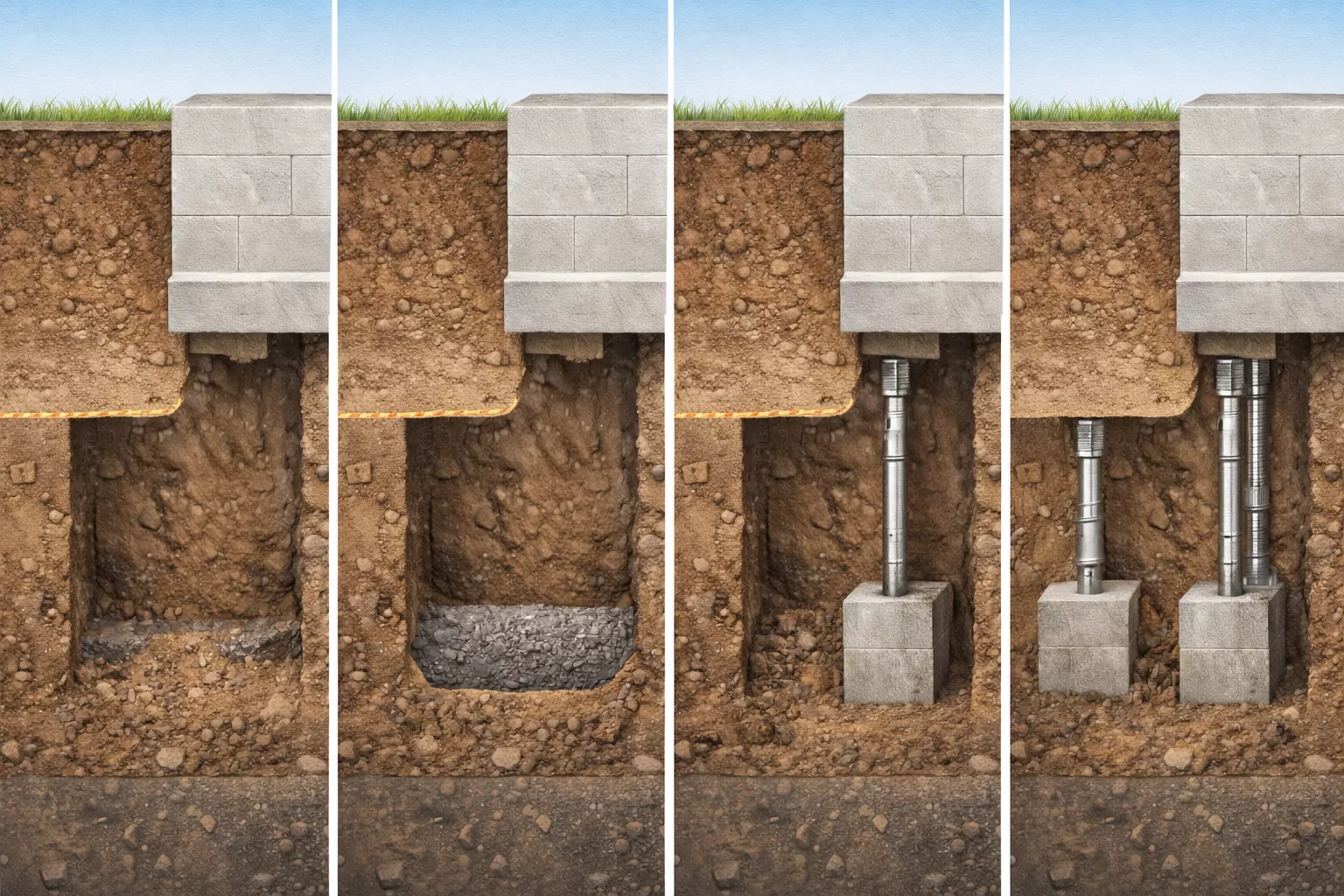
Excavation is the first and most critical step in underpinning. Instead of removing all soil at once, the process is performed in small, alternating sections, known as “pins” or “bays.” Each section is excavated beneath the existing foundation to a predetermined depth, allowing the rest of the structure to remain supported.
Key points of staged excavation:
- Excavations are typically 3–4 feet wide and spaced evenly along the foundation.
- Adjacent sections are never opened simultaneously, preventing load imbalance.
- Temporary supports, such as jacks or props, are installed to stabilize walls during excavation.
- Each completed section is inspected before moving to the next.
This incremental method ensures that structural stability is maintained throughout the process and that no sudden movement or cracking occurs in the existing foundation.
What Role Do Shuttering and Reinforcement Play During Underpinning?
Once excavation is complete in each section, formwork (also called shuttering) is constructed to shape and contain the concrete. Steel reinforcement bars (rebar) are then installed inside the formwork to improve tensile strength and bond the new foundation securely to the existing footing.
Importance of shuttering and reinforcement:
- Prevents soil collapse by containing wet concrete during placement.
- Ensures consistent foundation dimensions and alignment.
- Strengthens the joint between new and existing structural elements.
- Reduces the risk of settlement or cracking under future loads.
Proper shuttering and reinforcement are essential for creating a uniform, durable, and load-resistant foundation structure.
How Is Concrete Placed and Cured to Support Existing Structures?
High-strength concrete is poured into each shuttered section, filling the excavated void beneath the footing. The concrete must be placed evenly and compacted to eliminate air pockets that could weaken the structure.
Concrete curing process:
- Concrete is left to cure for at least 48–72 hours per section before proceeding.
- Moisture levels are controlled to prevent shrinkage or cracking.
- After curing, formwork is removed and inspected for defects.
- The process is repeated in adjacent sections until the entire perimeter is underpinned.
Once all sections have been completed, the new underpinning forms a continuous, reinforced foundation layer capable of bearing the entire structural load.
When Is Structural Load Transfer Safely Achieved?
Load transfer is the final stage of underpinning and represents the point at which the weight of the structure is fully supported by the new, deeper foundation. This is done gradually and only after the concrete in all underpinning sections has reached the required strength.
Steps for safe load transfer:
- Engineers verify curing strength using compression tests or inspection reports.
- The temporary supports are removed incrementally to distribute loads evenly.
- Structural monitoring ensures no unexpected movement occurs during transfer.
- Once confirmed stable, backfilling and waterproofing complete the process.
At this stage, the building’s foundation is officially stabilized and strengthened, ready for long-term performance and any planned basement finishing or expansion.
Through this stepwise, controlled sequence—excavation, reinforcement, concreting, and load transfer—the underpinning process delivers a secure, reinforced foundation that meets both engineering and safety standards.
How Do Engineers Ensure Accuracy During Each Underpinning Phase?
Accuracy is the foundation of a safe underpinning project. Every phase, from excavation to load transfer, requires continuous monitoring and precision control to prevent differential settlement, cracking, or misalignment. Engineers apply advanced measurement systems, detailed inspection schedules, and a methodical rate of progress to ensure that every action maintains the building’s balance and complies with design tolerances.
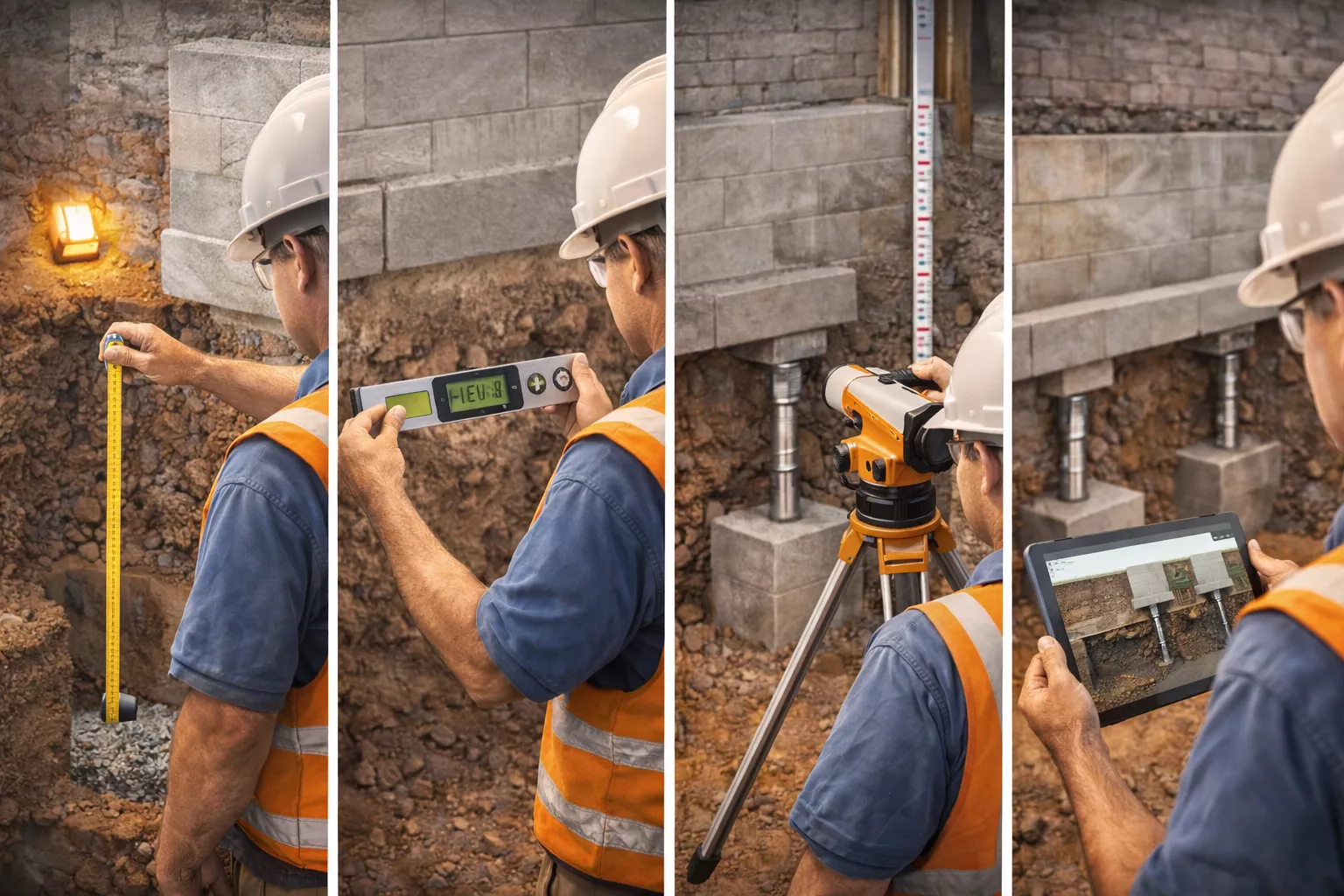
Maintaining precision throughout the process guarantees not only structural integrity but also long-term performance and safety for the property.
What Monitoring Systems Track Foundation Movement or Settlement?
During underpinning, engineers deploy structural monitoring systems to measure even the smallest shifts or settlements in real time. These tools allow early detection of any movement that could indicate instability or uneven load distribution.
Common monitoring methods include:
- Settlement markers: Installed along foundation walls to record vertical movement over time.
- Crack gauges: Measure any widening or propagation of cracks on interior or exterior walls.
- Laser levelling and total stations: Provide highly accurate elevation data across multiple points.
- Tilt sensors and inclinometers: Detect minute angular displacements or lateral movement.
The data collected from these systems is compared with design tolerances, enabling engineers to respond quickly if deviations occur, ensuring full control of the underpinning operation.
How Often Are Measurements Taken to Verify Structural Stability?
Measurement frequency depends on site complexity, soil type, and the underpinning method used. However, monitoring is generally performed continuously during active phases and at regular intervals after each section is completed.
Typical measurement schedule:
- Daily readings during excavation and concrete curing stages.
- Weekly or bi-weekly checks as subsequent sections are completed.
- Post-construction monitoring for several months to confirm stability.
Each reading is documented in a structural log reviewed by engineers and inspectors. Consistent tracking ensures that even subtle settlement trends are caught early and addressed before they escalate.
Why Is Incremental Progress Essential for Risk Control?
Underpinning is never rushed. Incremental progress is a safety requirement designed to minimize risk to both the structure and the crew. Excavating or loading too quickly can cause stress imbalances, leading to wall cracking, uneven settlement, or even partial collapse.
Reasons incremental pacing is critical:
- Ensures concrete in each section fully cures before new loads are applied.
- Allows engineers to analyze monitoring data and adjust sequencing if necessary.
- Reduces the risk of structural shock or vibration affecting stability.
- Provides inspection checkpoints for verifying alignment and compliance.
By advancing methodically—one section, one test, one verification at a time—engineers maintain complete control of the process, guaranteeing accuracy, safety, and durability in every underpinning project.
What Safety Measures Govern the Underpinning Process?
Safety governs every aspect of the underpinning process, from initial excavation to final load transfer. Because work occurs beneath active structures, strict adherence to engineering standards, protective systems, and regulatory guidelines is essential. Contractors and engineers collaborate under clearly defined safety protocols that safeguard workers, occupants, and neighbouring properties.
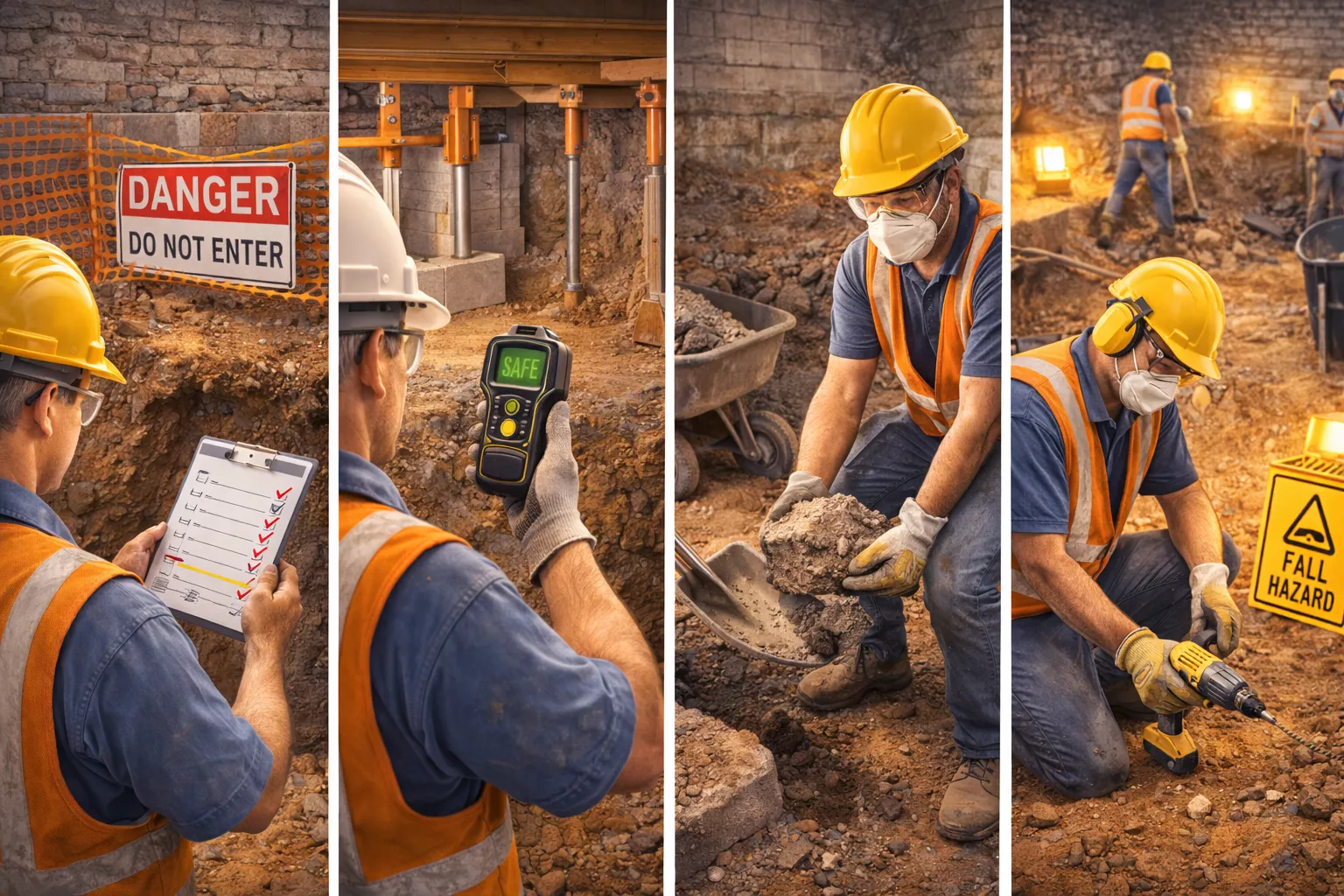
A comprehensive safety plan covers environmental hazards, ground stability, and confined-space operations, ensuring that every underpinning project proceeds without incident while maintaining full compliance with building and occupational safety codes.
How Do Safety Standards Minimize Risks to Workers and Residents?
Underpinning involves high-risk activities such as excavation below existing foundations, concrete work in confined spaces, and structural load management. To mitigate these risks, industry standards and safety codes are strictly enforced throughout the project.
Key safety practices include:
- Engineering sign-off before excavation begins, verifying the design’s structural safety.
- Sequential underpinning, ensuring load-bearing continuity at all times.
- Daily site safety inspections to identify hazards before work starts.
- Emergency preparedness plans for potential ground movement or water infiltration.
Following safety standards set by organizations such as the Canadian Centre for Occupational Health and Safety (CCOHS) and local building authorities helps protect both the construction team and nearby residents.
What Protective Systems Prevent Ground Collapse or Water Ingress?
Excavation beneath a foundation introduces risks of soil collapse, lateral pressure, and groundwater intrusion. Protective systems are installed to maintain soil stability and safeguard the workspace.
Protective measures include:
- Shoring and bracing systems to reinforce excavated walls.
- Sheet piling or soldier piles in deep or unstable soils.
- Weeping tiles and sump pumps to manage groundwater buildup.
- Waterproof membranes and drainage mats to prevent hydrostatic pressure after backfilling.
- Temporary retaining walls or trench boxes for added excavation support.
These systems collectively preserve both the integrity of the structure above and the safety of the workers below.
How Are Confined-Space Hazards Managed During Excavation?
Underpinning often takes place in tight, enclosed environments with limited airflow and access. Managing confined-space risks is critical for worker safety and project compliance.
Confined-space safety controls include:
- Continuous ventilation to prevent the buildup of dust, fumes, or gases.
- Gas detection monitors to ensure safe oxygen levels.
- Access ladders and egress points in every working zone.
- Trained spotters or safety attendants stationed outside confined spaces.
- Permit-to-work systems that document and control entry and exit.
Proper lighting and communication systems are also maintained to ensure visibility and coordination throughout excavation.
What PPE and Site Protocols Are Mandatory for Underpinning Crews?
Personal Protective Equipment (PPE) and disciplined site management are non-negotiable elements of underpinning safety. Every worker must be properly equipped and trained to operate in a potentially unstable environment.
Standard PPE and site protocols include:
- Hard hats, steel-toe boots, and high-visibility vests for general protection.
- Dust masks or respirators are required during excavation and concrete mixing.
- Safety gloves and eye protection for handling rebar and wet concrete.
- Hearing protection when using power tools or cutting machinery.
- Clear access routes and signage to control movement around excavation zones.
- Daily safety briefings and toolbox talks to reinforce risk awareness.
By maintaining these safety standards and enforcing strict supervision, underpinning projects achieve zero-compromise protection for both workers and residents, ensuring the entire process remains stable, compliant, and incident-free.
How Are Quality and Compliance Verified Through Inspections?
Quality control and compliance verification are essential stages in the underpinning process. Since the work directly affects the structural safety of a building, every phase—from excavation to final load transfer—is inspected under the supervision of qualified professionals and municipal authorities. These inspections confirm that the underpinning meets all engineering specifications, safety standards, and building code requirements before the structure is reloaded or occupied.
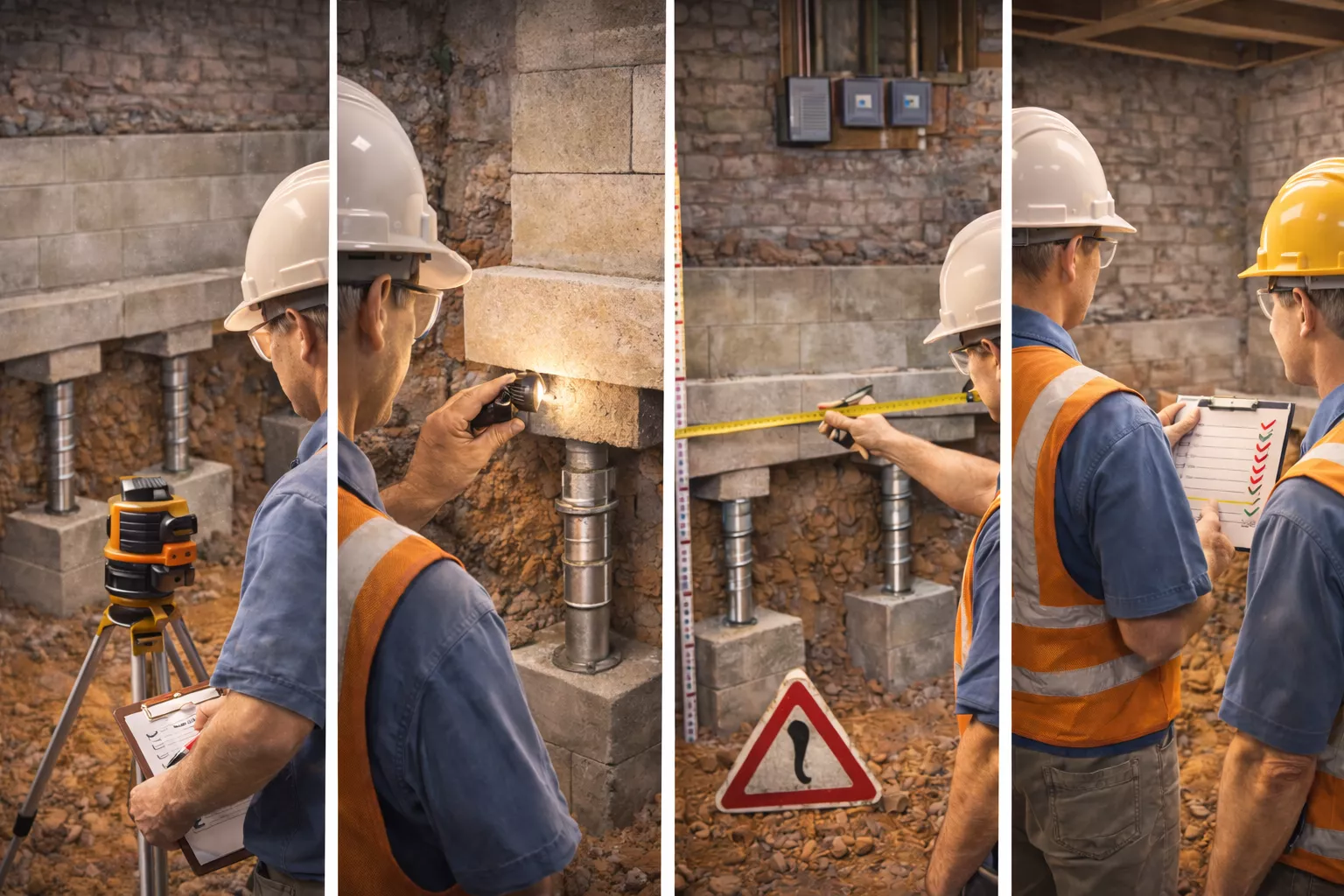
The goal is not only to confirm that the foundation is secure but also to ensure that each element of the work complies with both design intent and legal obligations under local construction regulations.
Who Conducts Inspections During and After the Underpinning Process?
Inspections are carried out by a combination of licensed engineers, building officials, and site supervisors who oversee the quality and safety of every stage.
Key inspection personnel include:
- Structural engineer: Reviews the underpinning design, verifies concrete curing times, and ensures that load transfer follows approved calculations.
- Geotechnical engineer: Monitors soil stability and confirms that the new foundation rests on suitable strata.
- Building control officer (municipal inspector): Ensures compliance with local building codes and permit conditions.
- Site supervisor or foreman: Maintains daily quality logs, safety records, and coordinates inspections.
Inspections occur at multiple stages—before excavation, after each pour, and at completion—to ensure the project remains within design and safety parameters.
What Structural Tests Confirm That the Underpinning Meets the Design Load Criteria?
To verify that the new underpinning can safely bear the intended loads, several structural and material tests are conducted both during and after construction. These tests measure strength, durability, and overall performance.
Common structural tests include:
- Concrete compressive strength tests: Laboratory testing of core samples ensures the concrete has reached the required design strength.
- Load-bearing tests: Confirm that the new foundation adequately supports the weight transferred from the existing structure.
- Reinforcement inspection: Verifies that steel rebar placement and cover depth meet engineering drawings.
- Settlement and alignment checks: Detect any minor deflection or differential movement after load transfer.
- Waterproofing verification: Ensures membranes and drainage systems are properly sealed and functional.
These evaluations collectively guarantee that the underpinning performs as intended and will remain stable under long-term conditions.
How Are Inspection Reports Documented for Building Control Approval?
Every inspection, test, and verification is formally documented and submitted for building control approval. Proper documentation ensures transparency, traceability, and legal compliance.
Typical reporting workflow:
- Inspection logs: Record details of each completed underpinning section, including date, dimensions, and materials used.
- Engineer certification reports: Signed confirmation that works meet the design and structural standards.
- Photographic records: Visual evidence of excavation stages, reinforcement placement, and completed pours.
- Test results and compliance certificates: Include laboratory findings, curing reports, and material quality data.
- Final approval package: Submitted to municipal building control for review and issuance of compliance confirmation.
Once approved, the documentation becomes part of the property’s permanent building record, demonstrating that the underpinning was executed safely, inspected rigorously, and certified for structural integrity.
Through these meticulous inspections and reporting procedures, underpinning projects maintain the highest standards of quality assurance—delivering a foundation that is both technically sound and legally compliant.
How Does Inspection Data Influence Long-Term Foundation Performance?
Inspection data collected during and after the underpinning process serve as the foundation’s ongoing health record. It provides a measurable history of performance indicators—such as settlement rates, moisture readings, and load distribution—that engineers use to confirm long-term stability. Properly analyzed inspection data helps detect minor shifts or weaknesses early, allowing timely maintenance before issues escalate.
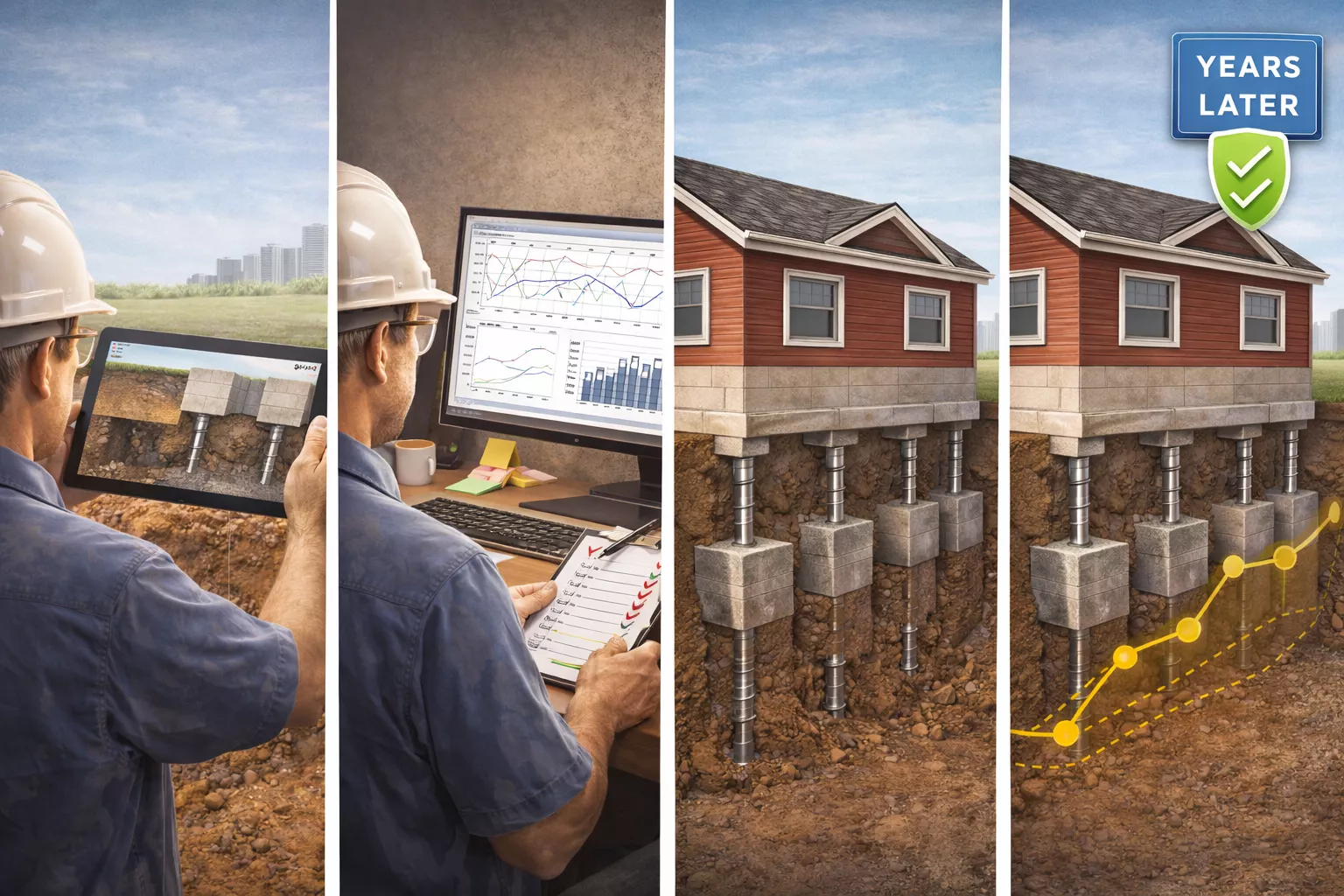
This long-term monitoring ensures that the new underpinning continues to perform as designed, protecting both the structural integrity and property value of the building for decades.
Why Is Post-Underpinning Monitoring Essential for Stability Assurance?
Once the underpinning process is complete, the structure enters a monitoring phase to verify that the foundation remains stable under real-world conditions. Post-underpinning monitoring identifies any delayed settlement, soil movement, or water infiltration that might affect long-term performance.
Key monitoring practices include:
- Periodic settlement readings using reference points or levelling benchmarks.
- Crack and deflection tracking to ensure walls and slabs remain stable.
- Moisture and drainage checks to monitor hydrostatic pressure or leaks.
- Engineer inspections at scheduled intervals to compare performance data with original design criteria.
Consistent post-construction monitoring ensures the underpinning maintains full structural strength and prevents minor issues from developing into costly structural repairs.
What Signs Indicate Successful Underpinning Performance Over Time?
The success of an underpinning project becomes evident through consistent performance indicators that confirm the structure’s stability and durability.
Positive signs of long-term underpinning success include:
- No measurable settlement beyond acceptable engineering tolerances.
- Stable walls and floors with no new or expanding cracks.
- Dry, well-drained basement conditions indicate effective waterproofing.
- Smooth operation of doors and windows, confirming no differential movement.
- Stable alignment of exterior features, such as brickwork or chimneys.
Regularly reviewing inspection data against these indicators allows engineers and property owners to verify that the underpinning continues to perform effectively, delivering the intended strength, safety, and longevity for the entire structure.
Through continuous inspection and data-driven evaluation, the foundation’s long-term reliability is not left to chance—it’s measured, recorded, and assured through ongoing performance monitoring.
How Does Project Planning Affect Cost and Duration of Underpinning?
Effective project planning is the foundation of a cost-efficient and timely underpinning project. Because underpinning involves multiple technical stages—assessment, excavation, concrete work, waterproofing, and inspection—proper scheduling and budgeting are essential to avoid delays, rework, or unplanned expenses. A well-structured plan accounts for soil type, access limitations, permit timelines, and structural complexity, allowing the process to proceed smoothly from start to finish.

Comprehensive planning ensures that the underpinning not only strengthens the foundation but also delivers predictable outcomes in terms of time, cost, and performance.
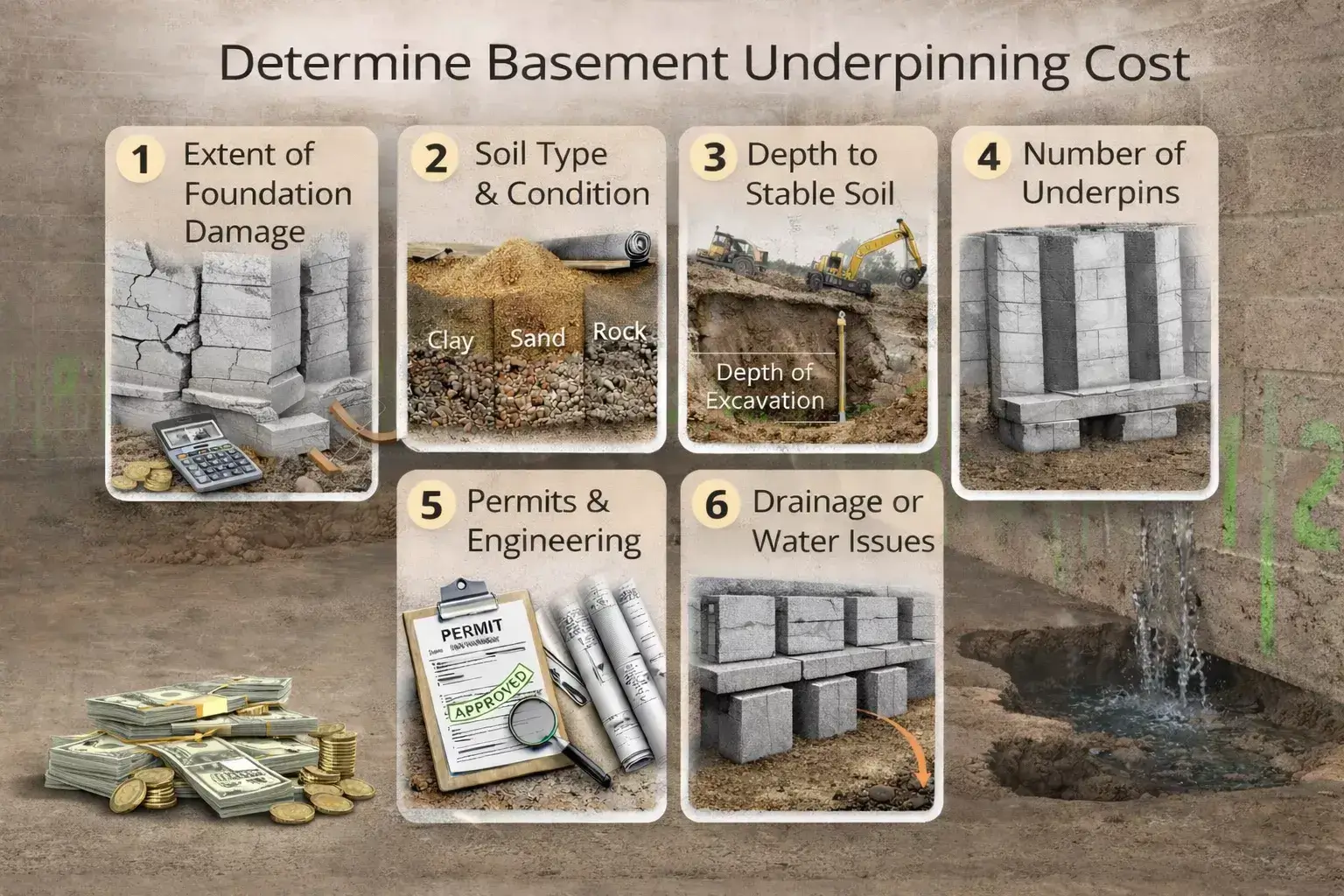
What Variables Influence Underpinning Timeframes and Project Budgets?
Several factors directly determine how long an underpinning project takes and how much it costs. Each variable interacts with the others, making accurate early assessment and realistic scheduling critical.
Primary variables include:
- Basement size and excavation depth: Larger or deeper basements require more excavation, reinforcement, and concrete volume, extending project duration.
- Soil conditions: Reactive or unstable soils demand additional testing, shoring, or piling, increasing cost and time.
- Structural complexity: Older or compromised foundations may require extra reinforcement or staged load transfers.
- Access and logistics: Limited site access or restricted equipment movement can slow material delivery and excavation.
- Permit and inspection delays: Municipal approval processes can add several weeks before work can begin.
- Additional works: Integrating waterproofing, plumbing, or drainage upgrades increases both cost and timeframe.
Clear communication between engineers, contractors, and inspectors at the planning stage helps anticipate these factors and minimize overruns.
Why Does the Chosen Underpinning Method Affect Overall Cost Efficiency?
The underpinning method selected for a project has a direct impact on both cost and efficiency. Each technique—such as mass concrete underpinning, beam-and-base systems, screw piles, or resin injection—carries different material, labour, and time requirements.
Cost-efficiency considerations:
- Mass concrete underpinning: Typically, the most economical for shallow foundations, but slower due to staged excavation and curing.
- Beam-and-base systems: Faster than traditional methods but require more engineering precision and higher material costs.
- Screw piles or mini-piles: Offer rapid installation with minimal disruption, but increase costs due to specialist equipment.
- Resin injection: Ideal for targeted soil stabilization; cost-effective for localized issues but unsuitable for major lowering.
Selecting the most appropriate method based on soil behaviour, structural load, and budget objectives ensures that time and money are used efficiently without compromising safety or durability.
Through strategic planning and method selection, underpinning projects achieve an optimal balance between time, cost, and long-term performance, ensuring the process remains both structurally sound and economically viable.