How Does Beam and Base Strengthen a Basement?
The beam and base system strengthens a basement by acting as a crucial component of the structure’s load-bearing system, distributing the entire weight of the structure to the foundation. Standard basement support beams, often utilizing steel for its high strength-to-weight ratio and excellent load-bearing capacity, are integral parts of the flooring system. They typically run down the centre of the home, distributing the weight of the entire structure via floor joists attached to them, transferring the heavy loads from upper floors through vertical support posts down to the foundation.
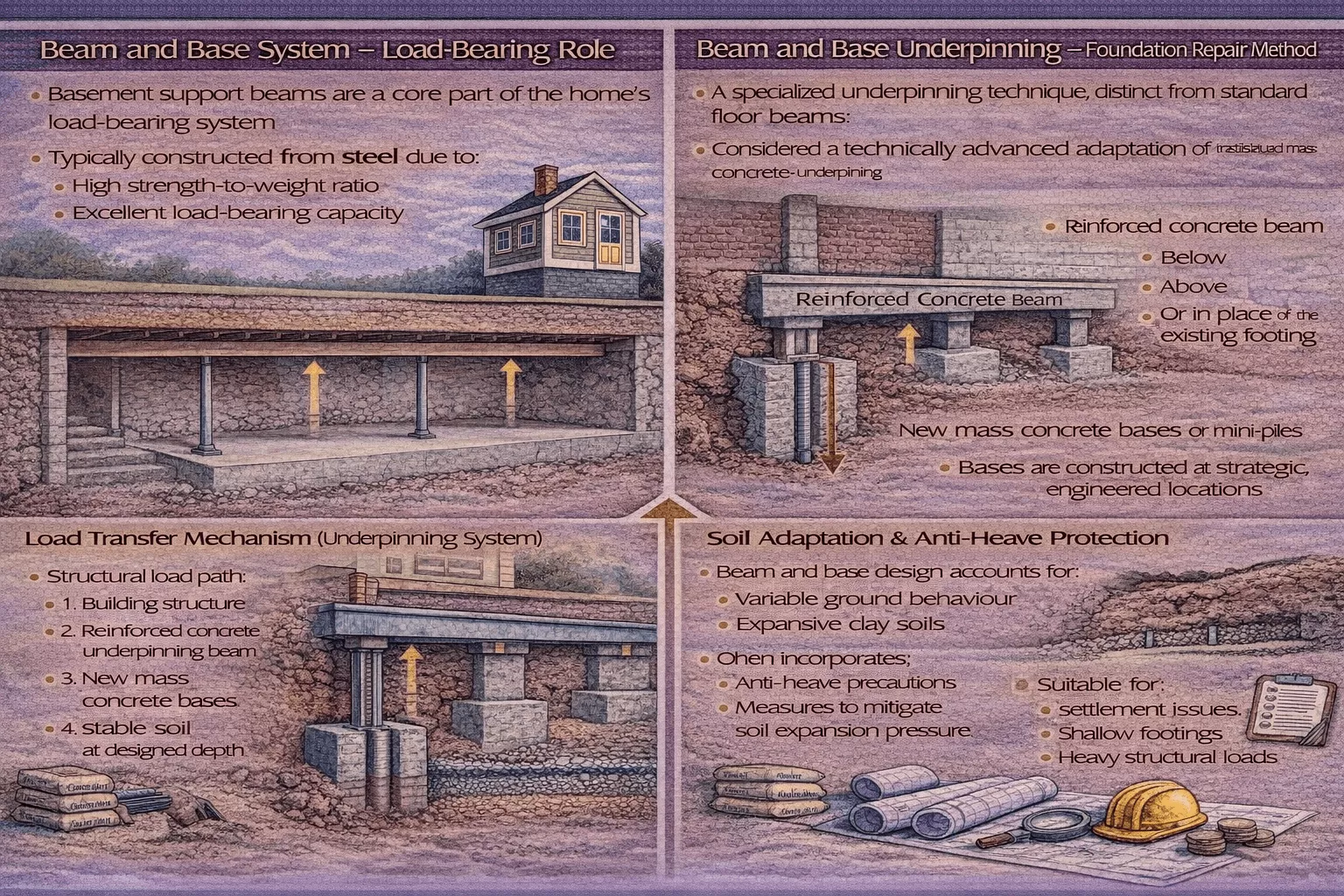
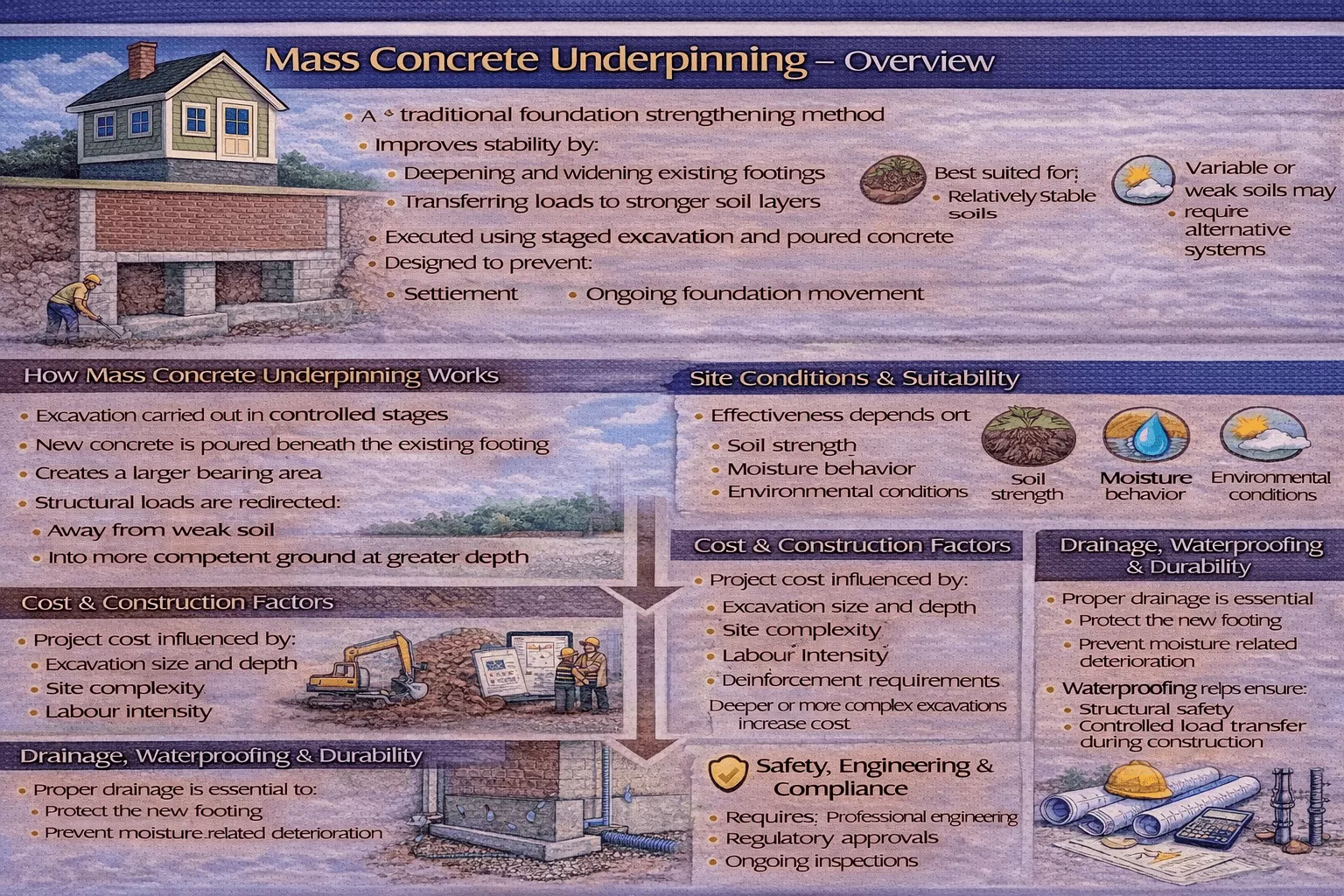
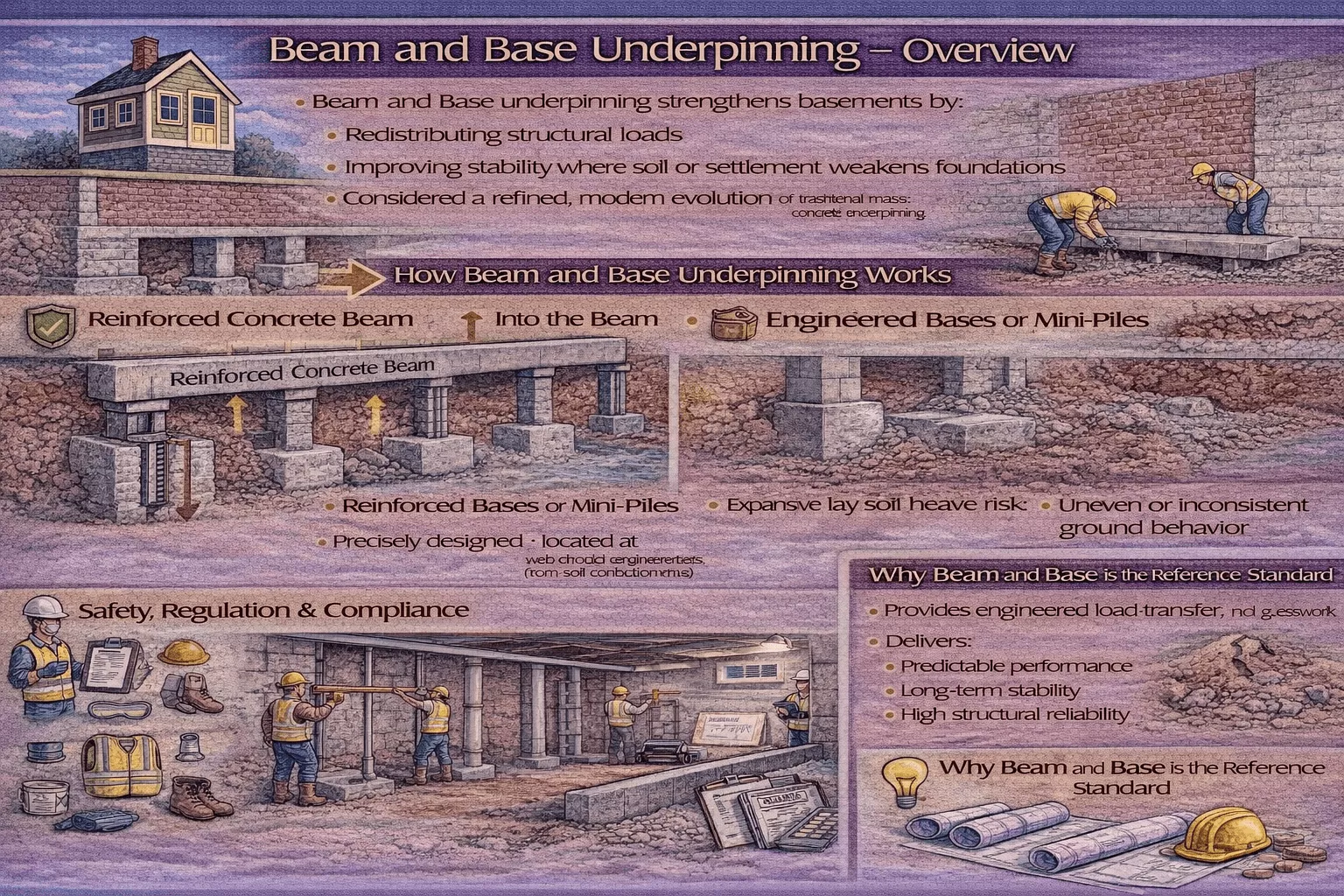
When referring to the specialized foundation repair technique, the beam and base method of underpinning is a technically advanced adaptation of traditional mass concrete underpinning. This method strengthens the structure by constructing a reinforced concrete beam below, above, or in place of the existing footing. This beam then transfers the load of the building to new mass concrete bases constructed at the designed strategic locations. The beam design and the required base sizes and depths are dependent upon the configuration of the building, the applied loads, and the prevailing ground conditions, often incorporating anti-heave precautions to mitigate potential expansion of clay soils.
When Is Beam and Base Underpinning Needed?
Beam and Base underpinning is needed when localized structural issues or challenging soil conditions require a technically advanced method to stabilize the foundation and manage load distribution. This method involves constructing a reinforced concrete beam beneath, above, or in replacement of the existing footing, which transfers the building’s load to strategically placed concrete bases or mini-piles.
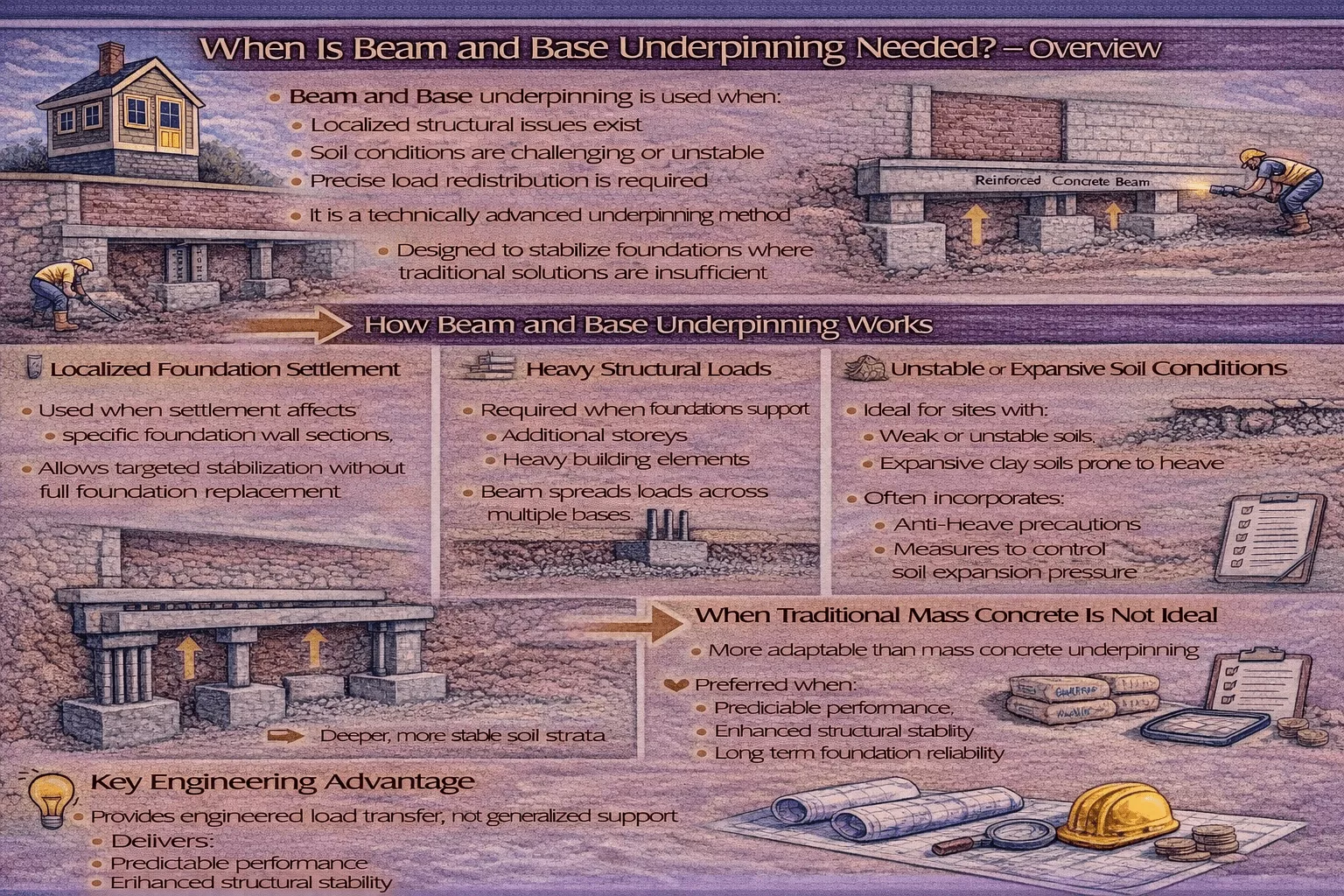
This technique is typically employed under the following circumstances:
- To address localized settlement affecting the existing foundation wall.
- To strengthen foundations supporting heavy applied loads, ensuring the load is adequately transferred across a broader area.
- When existing ground conditions, such as prevailing unstable soil or the potential expansion of clay soils, necessitate transferring the building’s weight down to stable soil strata, often incorporates anti-heave precautions.
- As a more adaptable solution than traditional mass concrete underpinning, where the beam design and base locations must be precisely engineered based on the building’s configuration, applied loads, and specific ground conditions.
How Does the Beam and Base Underpinning Process Run?
The beam and base underpinning process runs as a technically advanced adaptation of traditional mass concrete underpinning. The method involves constructing a reinforced concrete beam either below, above, or in place of the existing footing or foundation. This beam transfers the building’s weight and applied load across a broader area to strategically designed mass concrete bases or, alternatively, to stable soil via mini-piles. This process is ideal for structures with shallow foundations and is highly adaptable to various structural and soil conditions.
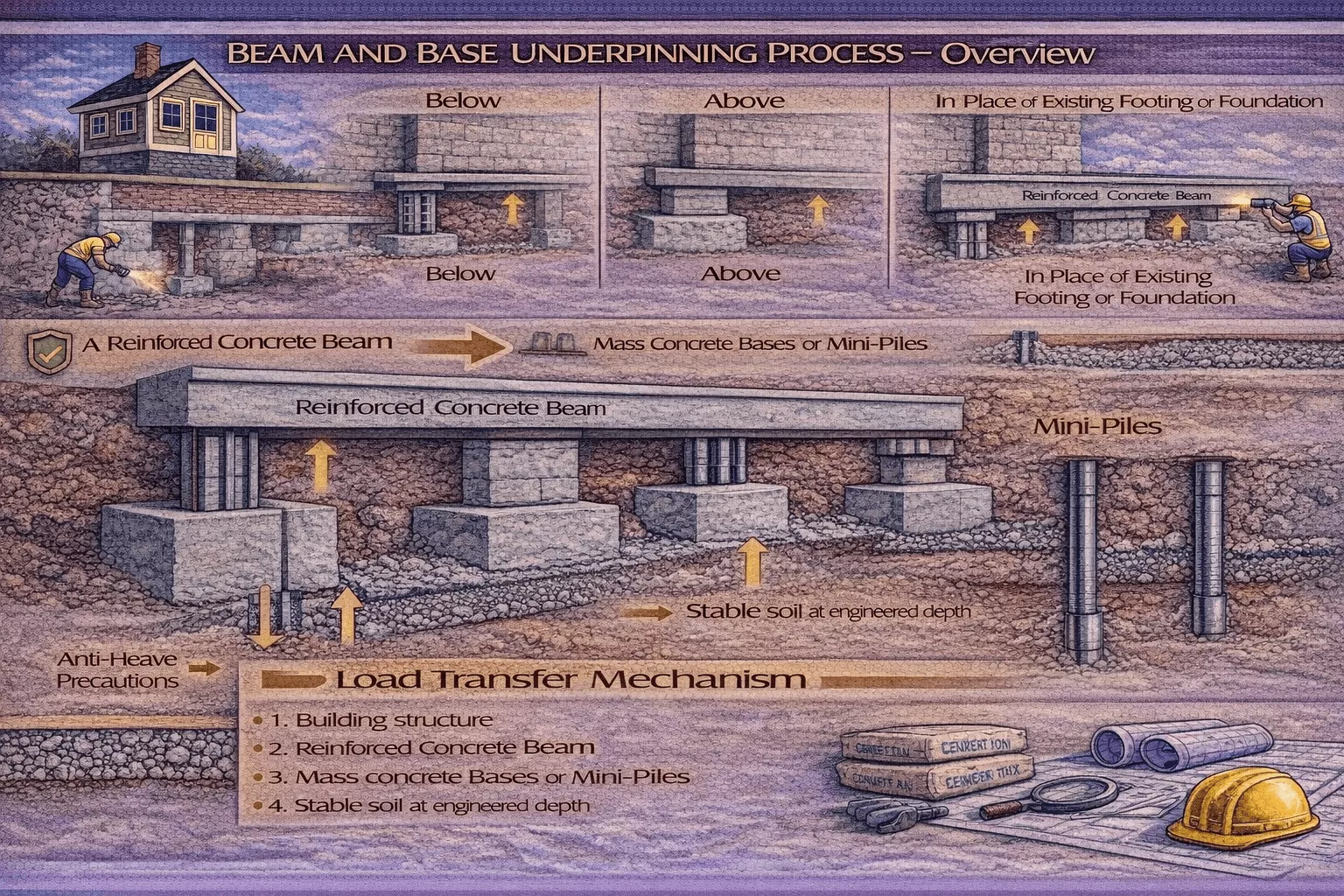
The beam design and the size and depth of the bases are determined by the configuration of the building, the applied loads, and the prevailing ground conditions. Mini-piles are typically utilized when ground conditions are very variable, access is restrictive, environmental pollution aspects are significant, or where structural movements must be minimal. Anti-heave precautions are also often incorporated when potential expansion of clay soils may occur.
How Does Beam and Base Enhance Basement Conversion?
The Beam and Base approach, often synonymous with foundational underpinning, enhances basement conversion primarily by increasing usable living space, improving structural integrity, and maximizing the property’s market value. This strategic foundational work is considered a more efficient and economical solution compared to highly disruptive construction alternatives like adding new floors or building extensions. By strategically increasing the ceiling height and overall usable square footage, Beam and Base transform the basement into a functional living space, making it an intelligent investment that significantly enhances the home’s market value.
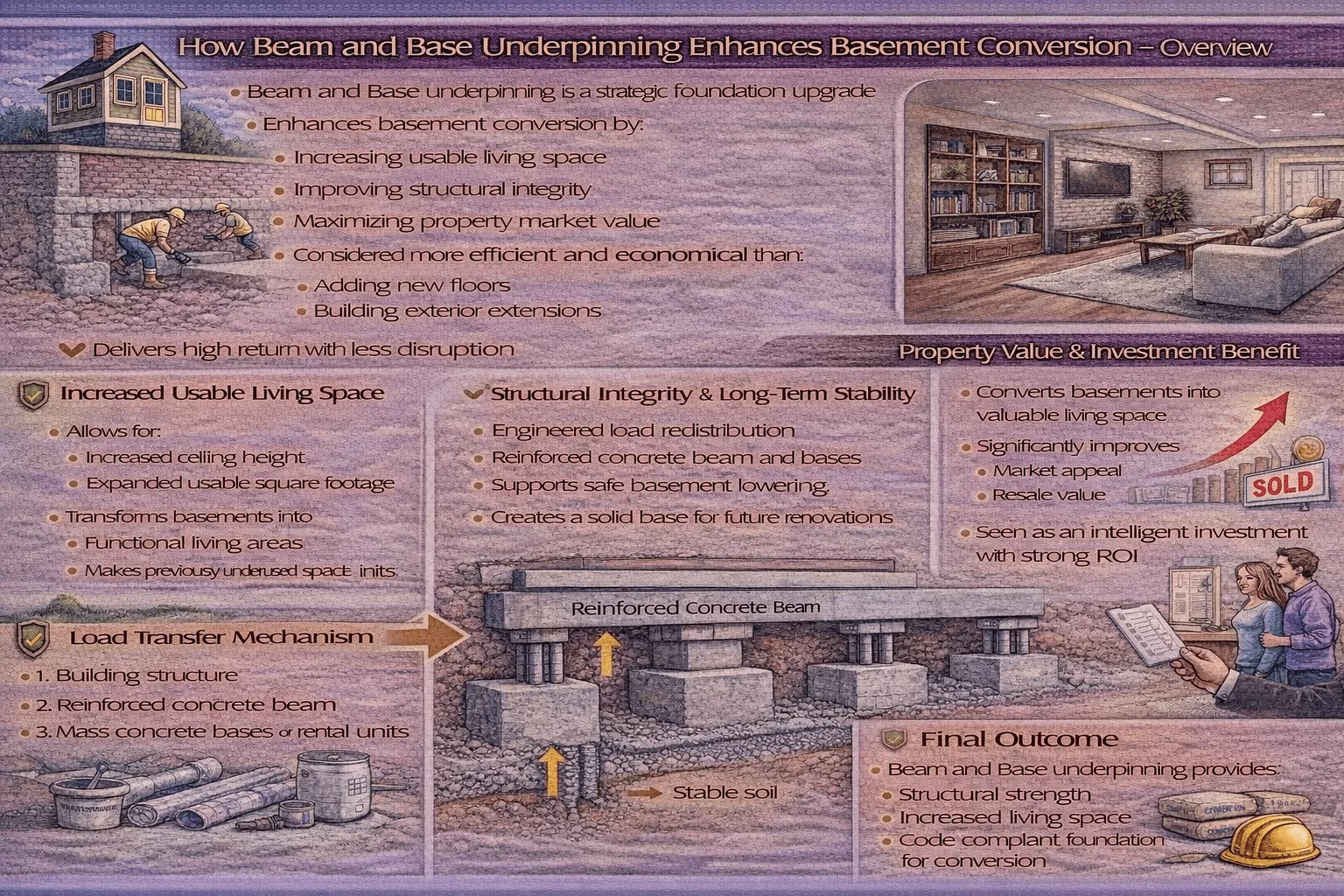
While the structural foundation is critical, the enhancement of the overall conversion also requires addressing essential factors for safety and long-term success. These preparatory steps include assessing key elements such as prioritizing moisture control through waterproofing the space, reviewing local building codes to ensure legal compliance and proper permitting, and planning effective lighting and ventilation. Addressing these elements early builds upon the foundational enhancement, resulting in a solid, code-compliant, and inviting basement transformation.
What Rules and Safety Steps Apply to Beam and Base Work?
Beam and base underpinning work falls under the Occupational Health and Safety Act (OHSA), which requires employers to take every reasonable precaution to protect workers from hazards associated with excavation, shoring, and structural support activities. Compliance depends on strict adherence to safe excavation practices, proper shoring, mandatory use of PPE, and continuous oversight to ensure site stability. Each stage of the underpinning process must meet OSHA requirements and local building codes, with a final municipal inspection required to confirm that the new foundation is structurally secure before approval.
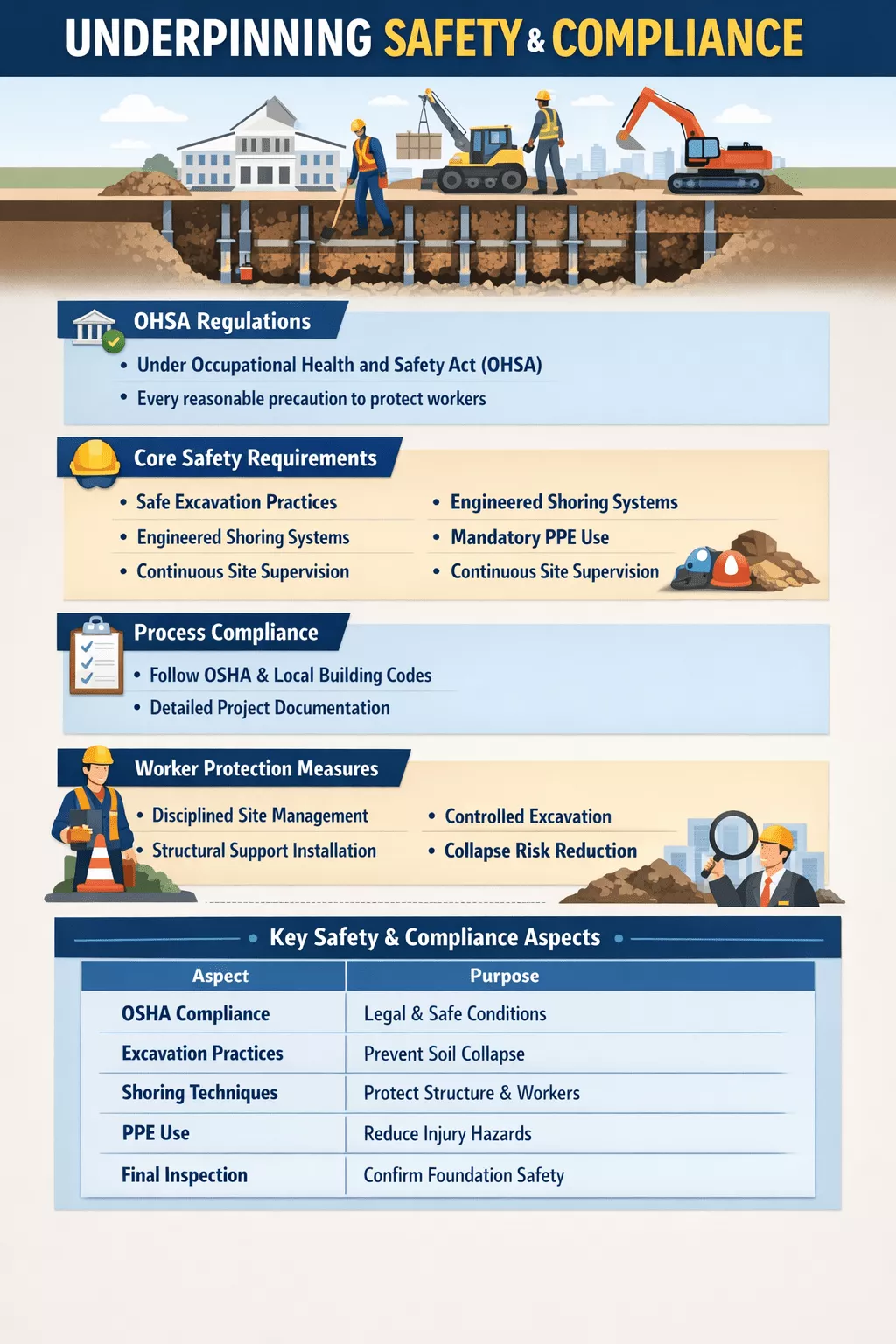
Worker protection and project safety rely on disciplined site management, controlled excavation, correct structural support procedures, and thorough documentation. These steps minimize risk, prevent collapse during underpinning operations, and ensure that the completed foundation meets regulatory standards for long-term safety and performance.
Key Safety and Compliance Aspects:
| Aspect | Requirement | Purpose |
|---|---|---|
| OSHA Compliance | Follow all act provisions throughout the project | Ensures legal and safe working conditions |
| Excavation Practices | Maintain proper excavation depth and stability | Prevents soil collapse and structural failure |
| Shoring Techniques | Use engineered shoring where required | Protects workers and supports the existing structure |
| PPE Use | Mandatory protective equipment for all workers | Reduces injury risk from on-site hazards |
| Final Inspection | City inspector verifies code compliance | Confirms foundation safety before approval |