
What Is House Underpinning In Toronto?
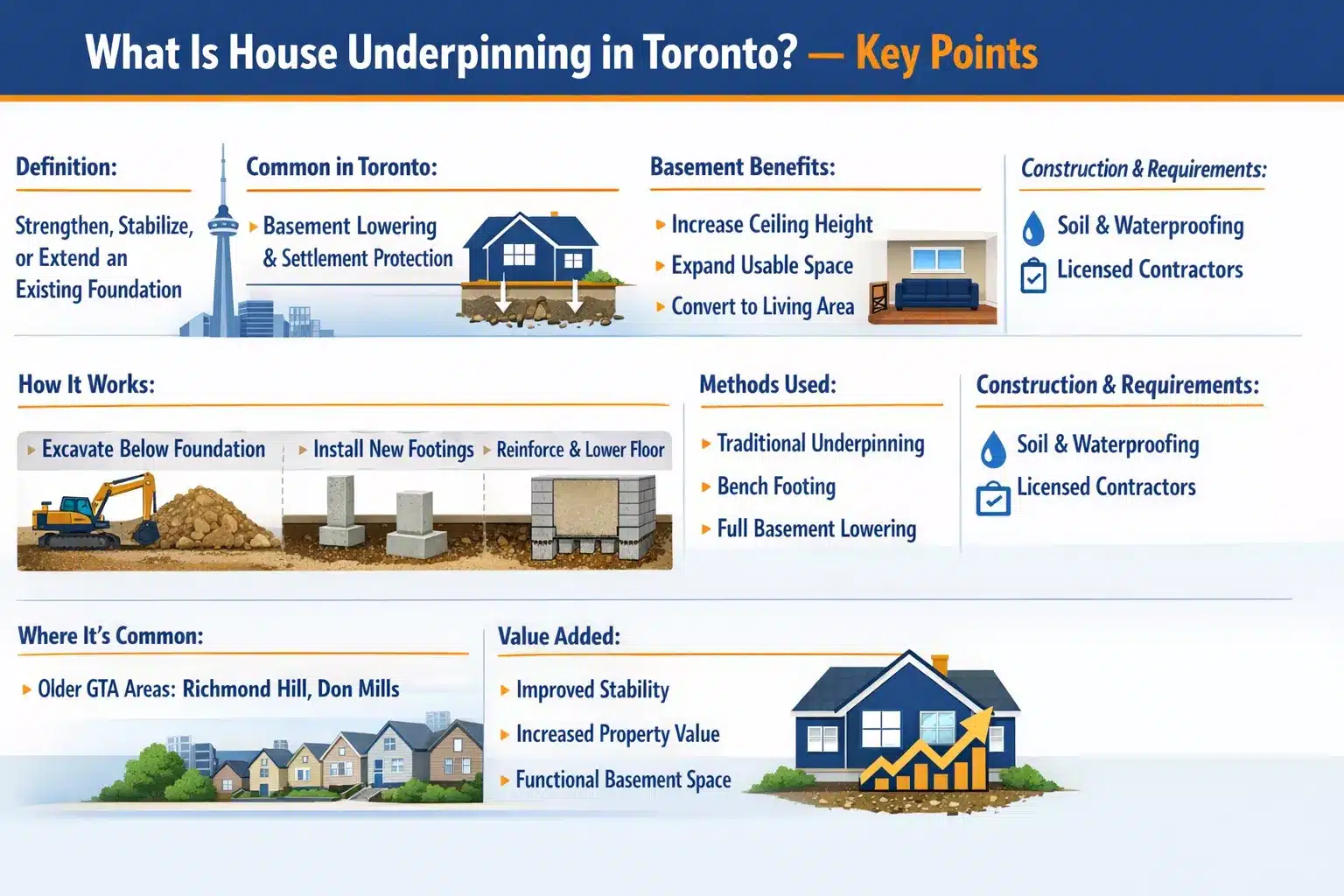
House underpinning in Toronto refers to a structural construction method used to strengthen, stabilize, or extend a home’s foundation when the existing foundation no longer provides adequate support or when homeowners want to increase basement space. In the context of Toronto, underpinning is commonly linked to basement underpinning, basement lowering, and long-term protection of a Toronto home against settlement, soil movement, and structural issues.
House underpinning in Greater Toronto Area involves carefully excavating beneath the existing foundation and extending the foundation wall down to stronger soil conditions. This process transfers building loads from a shallow foundation to deeper, more stable soil or concrete footings. Many Toronto homeowners choose underpinning when the basement ceiling height is too low, when a foundation crack indicates movement, or when converting a basement into functional living space.
In a typical basement underpinning process, contractors excavate sections below the basement wall, install new concrete footings, and pour reinforced concrete to form a deeper foundation. The concrete floor is then lowered to create more usable space, often measured per square foot gained. This method preserves structural integrity while allowing a full basement lowering project without altering the home’s footprint.
Underpinning in Toronto include:
- Structural purpose: Underpinning improves load transfer, resolves structural issues, and protects the home’s foundation.
- Basement expansion: Basement underpinning increases ceiling height, usable floor area, and overall basement space.
- Methods used: Common approaches include traditional underpinning, bench footing, and full basement lowering process, selected based on soil and building conditions.
- Soil and excavation: Controlled excavation considers local soil behavior to prevent movement during construction.
- Water protection: Many projects integrate exterior waterproofing to manage groundwater around the basement.
- Professional delivery: A licensed underpinning contractor manages each underpinning project to meet Toronto building requirements.
House underpinning is widely used across neighborhoods such as Richmond Hill and Don Mills, where older homes often sit on shallow foundations. A well-planned basement underpinning service supports long-term safety, adds value to the property, and transforms an underused Toronto basement into practical, compliant living space.
What Is Residential Underpinning In Toronto?
Residential underpinning in Toronto is a structural construction solution that strengthens and extends a home’s foundation when the existing foundation no longer provides adequate support or when homeowners want to increase basement space. In Toronto, residential underpinning commonly supports basement underpinning, basement lowering, and long-term protection of a Toronto home affected by soil movement, aging construction, or structural limitations.
Residential underpinning works by extending the homes foundation downward from a shallow foundation to deeper, load-bearing soil conditions. This process stabilizes the foundation wall, redistributes building loads, and restores structural integrity. In many Toronto basement underpinning projects, underpinning also supports basement lowering to increase ceiling height and convert an underused basement into functional living space with a new concrete floor.
The basement underpinning process follows a staged excavation sequence beneath the basement wall. Each section receives reinforced concrete or a new footing, forming a deeper structural base. Once completed, the floor level is lowered, increasing usable area measured by square foot. This approach allows a full basement lowering project without expanding the home footprint.
Residential underpinning remains common across the Greater Toronto Area, including areas such as Richmond Hill and Don Mills, where older homes often sit on shallow or aging foundations.
Residential underpinning in Toronto include:
- Structural purpose: Addresses structural issues, stabilizes load paths, and resolves foundation movement or a foundation crack.
- Basement expansion: Supports basement lowering process, improves basement ceiling height, and increases usable space.
- Methods used: Includes traditional underpinning, bench footing, and full-depth underpinning basement systems.
- Soil management: Design reflects local soil behavior to maintain stability during excavation.
- Water protection: Projects frequently include exterior waterproofing to manage groundwater at deeper levels.
- Professional execution: A qualified underpinning contractor delivers each underpinning project to meet structural and municipal requirements.
- Service scope: Delivered as a complete basement underpinning service or bundled basement underpinning services for structural reinforcement and space creation.
Residential underpinning provides Toronto homeowners with a permanent structural upgrade that improves safety, increases property value, and transforms a Toronto basement into compliant, long-term living space.
How Is Underpinning Done In Toronto Houses?
Underpinning in Toronto houses is a controlled structural construction process used to strengthen a home’s foundation, correct structural issues, and support basement lowering to create additional usable space. In Toronto, underpinning addresses shallow or weakened foundations, changing soil conditions, and the need for increased basement ceiling height in older homes.
Step-by-Step Underpinning Process in Toronto Houses:
Residential underpinning Toronto projects follow a sequenced method designed to protect the existing foundation while maintaining structural integrity throughout construction.
- Structural assessment and planning
Engineers assess the homes foundation, identify foundation crack patterns, confirm load paths, and evaluate soil behavior. The design defines the underpinning method, depth, and reinforcement needed for the underpinning project. - Sectioned excavation beneath the foundation
Controlled excavation occurs in short stages below the basement wall and foundation wall. This staged approach prevents movement while extending a shallow foundation to stable bearing soil. - Footing installation and structural reinforcement
Each excavated section receives a new footing, formed with reinforced concrete. This transfers loads safely from the old foundation to deeper soil, restoring long-term stability. - Foundation wall extension
New concrete sections extend the foundation downward, integrating with the existing foundation to create a continuous structural system. This step defines the final depth of the underpinning basement. - Basement lowering and floor reconstruction
Once structural work is complete, the basement lowering process begins. The floor is lowered and rebuilt as a new concrete floor, increasing ceiling height and total square foot area. - Waterproofing and moisture control
Deeper foundations expose walls to groundwater. Exterior waterproofing protects the basement wall and preserves the durability of the Toronto basement underpinning system. - Final inspections and completion
The underpinning contractor completes finishing work and confirms compliance. The basement space becomes ready for conversion into compliant living space.
This basement underpinning process applies across the Greater Toronto Area, including neighborhoods such as Richmond Hill and Don Mills.
Why Underpinning Is Done in Toronto Houses
Underpinning serves both structural and functional purposes for homeowners in Toronto.
- Foundation stabilization: Corrects settlement, load failure, and ongoing structural reinforcement needs caused by weak or shifting soil.
- Basement expansion: Enables basement lowering project execution, increasing basement ceiling height and usable space.
- Long-term durability: Improves resistance to future soil movement and moisture exposure.
- Space optimization: Converts underused Toronto basement areas into valuable living space without expanding the home footprint.
- Compliance and safety: Ensures the foundation meets modern structural performance expectations for residential use.
A professionally delivered basement underpinning service provides Toronto homeowners with a permanent structural solution that protects the home, increases space efficiency, and enhances long-term property value.
What Is Underpinning In Toronto?
Underpinning in Toronto is a structural process used to strengthen a building’s foundation or deepen a basement by excavating beneath existing footings in sections,, adding new concrete, and reinforcing the structure to improve load capacity, resolve structural issues, and create additional usable space. In Toronto, underpinning is closely associated with basement underpinning, basement lowering, and long-term protection of a Toronto home affected by aging construction, weak soil conditions, or limited basement ceiling height.
Underpinning works by extending a shallow foundation downward so building loads transfer safely through the foundation wall and footing into stronger soil. This method restores structural integrity to the homes foundation and supports basement lowering process work that increases square foot area and overall basement space. Many Toronto homeowners use underpinning to convert an underused Toronto basement into compliant living space with a new concrete floor.
The underpinning process follows a staged excavation sequence beneath the basement wall to protect the existing foundation at all times. Each stage receives reinforced concrete, forming a deeper structural base. Once structural reinforcement is complete, the floor level is lowered and rebuilt, finalizing the basement lowering project.
Underpinning in Toronto Key Aspects:
- Structural purpose: Addresses settlement, load failure, and visible signs such as a foundation crack while improving overall structural reinforcement.
- Basement expansion: Enables underpinning basement and basement lowering to increase ceiling height and usable space.
- Methods applied: Includes traditional underpinning, full-depth systems, and bench footing, selected based on soil and building conditions.
- Soil-driven design: Engineering decisions reflect local soil conditions to maintain stability during and after excavation.
- Water management: Deeper foundations often integrate exterior waterproofing to control groundwater around the basement wall.
- Professional execution: A licensed underpinning contractor delivers each underpinning project in line with structural and municipal requirements.
- Service scope: Delivered as a complete basement underpinning service or bundled basement underpinning services for structural and space upgrades.
Underpinning is widely used across the Greater Toronto Area, including neighborhoods such as Richmond Hill and Don Mills, where many properties rely on older or shallow foundations. When correctly designed and executed, basement underpinning Toronto provides a permanent structural solution that improves safety, increases space efficiency, and enhances long-term property value for homeowners.
Do You Need A Permit For Underpinning In Toronto?
Yes, a building permit is mandatory for underpinning in Toronto because underpinning directly alters a building’s foundation, affects structural integrity, and involves regulated excavation beneath the existing foundation. In Toronto, any underpinning Toronto work including basement underpinning, basement lowering, or a full basement lowering project requires formal approval before construction starts.
A permit is required because the underpinning process changes load paths through the foundation wall, footing, and surrounding soil conditions. City reviewers verify that the proposed underpinning basement design maintains safety during staged excavation, preserves neighboring structures, and delivers permanent structural reinforcement. Permit review also confirms that new concrete work, the rebuilt concrete floor, and any increase in square foot or usable space meet local construction standards for a Toronto home.
During a typical basement underpinning Toronto application, engineered drawings outline the basement underpinning process, including excavation sequencing below the basement wall, footing depth, and soil bearing assumptions. Where exterior waterproofing is included, permit documentation confirms moisture protection for the deeper basement space. These controls protect both the property and adjacent homes, which is critical in dense neighborhoods.
Permits apply across the Greater Toronto Area, including locations such as Richmond Hill and Don Mills, where many houses sit on a shallow foundation and undergo basement lowering process upgrades.
What are the key requirements and risks for underpinning permits in Toronto?
Key requirements:
- Building permit approval: Mandatory for any underpinning project affecting the homes foundation or basement ceiling height.
- Engineered drawings: Structural plans defining footing size, reinforcement, and staged excavation under the foundation wall.
- Soil verification: Documentation addressing local soil behavior and bearing capacity.
- Inspection stages: City inspections during excavation, concrete placement, and completion of basement underpinning service work.
- Qualified execution: Work completed by a licensed underpinning contractor delivering compliant basement underpinning services.
Risks without a permit:
- Stop-work orders: Unapproved work halts construction and delays the underpinning basement timeline.
- Structural exposure: Improper sequencing risks settlement, foundation crack development, and unresolved structural issues.
- Legal and financial penalties: Fines, forced remediation, and complications during property sale.
- Insurance limitations: Coverage disputes for unpermitted basement underpinning project work.
For Toronto homeowners, securing the correct permit ensures the underpinning process protects structural safety, supports lawful living space creation, and delivers a durable, compliant Toronto basement upgrade.
How Does Underpinning Work In Toronto?
Underpinning in Toronto works by strengthening and extending a building’s foundation to deeper, stable soil so the structure regains long-term load support and safety. In Toronto, underpinning typically involves excavating beneath the existing foundation in controlled sections, adding reinforced concrete, and integrating new structural elements with the original foundation wall. This staged approach protects structural integrity while work progresses below the home.
The underpinning work begins with engineering design based on local soil conditions, foundation depth, and observed structural issues such as settlement or a foundation crack. Contractors then excavate short sections under the basement wall, install new footing elements, and pour reinforced concrete to extend the homes foundation downward from a shallow foundation to stronger bearing soil. Each section cures before the next area is opened, maintaining stability throughout the underpinning process. This method forms a continuous structural base that transfers building loads safely into the ground.
Where the project includes basement underpinning or basement lowering, the same process supports deeper excavation so the floor level can be lowered after structural reinforcement is complete. The result is increased basement ceiling height, a rebuilt concrete floor, and more usable space measured by additional square foot area. Many Toronto homeowners use basement underpinning Toronto solutions to convert a Toronto basement into compliant living space without expanding the building footprint.
Across the Greater Toronto Area, including neighborhoods such as Richmond Hill and Don Mills, underpinning also integrates moisture protection. Deeper foundations often receive exterior waterproofing to manage groundwater against the basement wall and preserve long-term durability. When delivered by a qualified underpinning contractor as part of a complete basement underpinning service, the underpinning project provides permanent structural reinforcement, resolves foundation instability, and creates functional basement space suitable for modern residential use.
What Does Underpinning Mean In Toronto Construction?
Underpinning in Toronto construction means a regulated structural construction practice that strengthens or extends a building’s foundation by excavating beneath the existing footings in controlled stages and rebuilding support at a deeper level. In Toronto, underpinning construction addresses foundation instability, shallow bearing depth, and design limitations that restrict basement use or structural performance.
Underpinning construction focuses on restoring and improving structural integrity by transferring building loads from a shallow or distressed foundation to competent soil or engineered support below. The work involves staged excavation under the foundation wall, installation of new structural elements, and integration with the original foundation so the load path remains continuous and stable. This construction method supports residential and mixed-use buildings where settlement, soil movement, or aging materials create structural risk. In many Toronto projects, underpinning construction also forms the structural basis for basement lowering, allowing increased ceiling height and compliant interior space while maintaining the building footprint. The process follows engineered sequencing, controlled excavation, and reinforced concrete placement to protect adjacent structures and ensure long-term durability in dense urban conditions across the city.
What Follow-up Inspections Are Recommended After Underpinning In Toronto?
In Toronto, underpinning projects require a series of mandatory inspections by City of Toronto building inspectors to ensure compliance with the Ontario Building Code and structural safety. After underpinning work begins in Toronto, inspections verify that excavation sequencing, foundation extensions, and structural reinforcement protect the building and neighboring properties. These follow-up checks confirm that the underpinning process delivers long-term stability and meets approved permit conditions.
Mandatory follow-up inspections typically occur at defined construction stages. Inspectors review excavation depth and soil bearing before new concrete placement, confirm footing dimensions and reinforcement once each underpinning section is formed, and assess foundation wall extensions for alignment and load transfer. Where basement lowering is included, inspections also cover the rebuilt floor slab and drainage provisions. Final inspections confirm that all underpinning work achieves structural integrity, resolves foundation risks, and complies with the Ontario Building Code before the space is approved for continued use.
What Inspections Are Required For Underpinning In Toronto?
Underpinning in Toronto requires a building permit and mandatory City of Toronto inspections at specific stages: inspection of soil/foundation, inspection of reinforcing steel (rebar) before pouring concrete, inspection of completed sections, and a final inspection. These inspections are enforced by The City of Toronto to confirm that the underpinning work protects structural safety, follows approved engineering drawings, and maintains long-term foundation performance.
Required inspections and milestones focus on risk control during each phase of the underpinning process. Inspectors first verify excavation depth, soil bearing conditions, and the condition of the existing foundation before any concrete is placed. Rebar inspections confirm correct size, spacing, and placement prior to concrete pours for new footings and foundation extensions. Section-by-section inspections ensure each completed underpinning stage achieves proper alignment, curing, and load transfer before the next stage proceeds. A final inspection confirms that all underpinning work complies with the building permit, resolves structural issues, and meets municipal requirements for continued use or basement occupancy.
What Inspections Happen During Underpinning In Toronto?
Underpinning in Toronto requires multiple, mandatory, and scheduled inspections by City of Toronto building inspectors at critical stages to ensure compliance with the Ontario Building Code and approved engineering plans. During an underpinning project, inspectors from The City of Toronto verify that excavation sequencing, foundation extensions, and structural reinforcement protect the building and adjacent properties. For underpinning in Toronto, the inspector will evaluate whether the new foundation is secure and if the construction process followed proper safety standards.
Key inspections occur as the work progresses. Inspectors first review excavation conditions to confirm soil bearing capacity and the stability of the existing foundation before concrete placement. Reinforcing steel inspections verify rebar size, spacing, and positioning prior to pours for new footings and foundation walls. Section completion inspections confirm alignment, curing, and load transfer for each underpinning stage before the next section proceeds. Where basement lowering is part of the scope, inspectors assess slab preparation and drainage. A final inspection confirms the completed underpinning meets approved drawings, achieves structural integrity, and satisfies Ontario Building Code requirements for continued occupancy or basement use.
What Are The Steps of Underpinning In Toronto?
Underpinning in Toronto is a structural renovation process to lower basement floors or strengthen foundations, requiring engineered, city-approved permits. The work follows a regulated sequence that protects the existing foundation, manages risk during excavation, and restores long-term structural integrity. Each stage links construction activity with inspection, structural verification, and excavation planning to meet municipal and Ontario Building Code requirements.
Detailed Steps of Underpinning in Toronto
- Engineering assessment and excavation planning
A structural engineer evaluates the home’s foundation, soil conditions, and load paths. Engineering drawings define excavation depth, section size, reinforcement details, and sequencing to protect the structure during work. - Building permit approval and pre-construction inspection
A building permit is issued by The City of Toronto. Inspectors review approved plans before excavation begins to confirm scope, safety measures, and compliance. - Sectioned excavation beneath the foundation
Contractors excavate in small, controlled sections under the foundation wall. This staged approach prevents movement and preserves stability while extending support to deeper bearing soil. - Soil and foundation inspection
Inspectors assess exposed soil bearing capacity and the condition of the existing foundation before any concrete is placed. Approval is required to proceed. - Reinforcing steel (rebar) placement and inspection
Reinforcement is installed for new footings and foundation extensions. Inspectors verify rebar size, spacing, and placement prior to concrete pours. - Concrete placement and curing
Reinforced concrete is poured to form new footings and foundation wall extensions. Each section cures fully before adjacent sections are excavated. - Section completion inspection
Inspectors confirm alignment, curing, and load transfer for each completed underpinning section before the next stage proceeds. - Basement lowering and slab construction (if included)
When basement lowering is part of the scope, the floor level is reduced and a new slab is built. Drainage and moisture protection measures are reviewed during inspection. - Final structural inspection
Inspectors confirm the completed underpinning meets approved drawings and code requirements. For underpinning in Toronto, the inspector will evaluate whether the new foundation is secure and if the construction process followed proper safety standards.
This step-by-step process ensures underpinning work in Toronto remains structurally sound, code-compliant, and safe from excavation through final approval.